
Sarah Mitchell and the Bedroom Window Left Open for the Rain
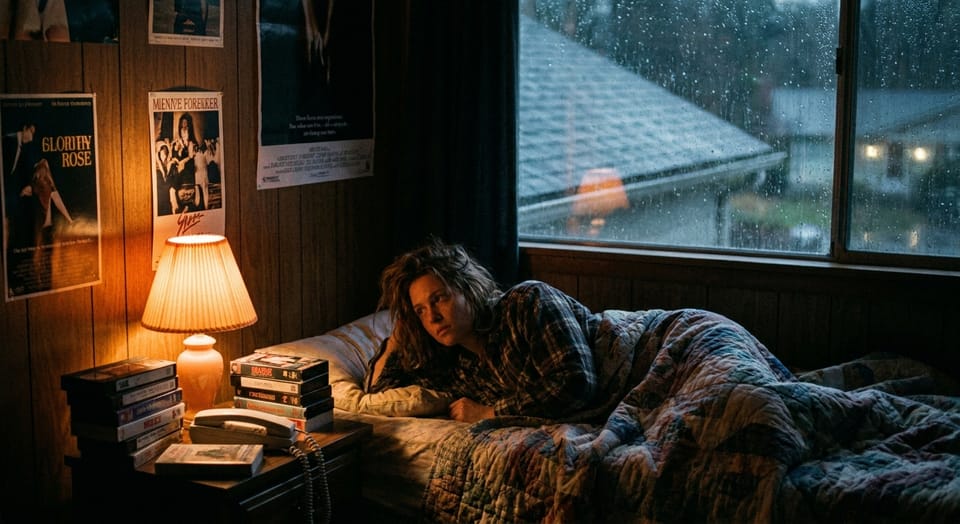
Somewhere in the 1990s, Sarah Mitchell went to bed on a night that didn’t ask to be remembered. No celebration, no bad news, no phone call that split life into before and after—just an ordinary evening that ended with a roof keeping time.
This memory is brought to you by Oh Sherri Irish Pub — Testing the partner system

This story is brought to you by
Oh Sherri Irish Pub
Testing the partner system
Visit Oh Sherri Irish Pub →It started as a light rain sometime after dinner, just a soft tapping on the roof. By the time I went to bed, it had turned into a steady rhythm that filled the whole house. I remember leaving the window cracked just enough to hear it clearly. The sound felt constant, almost comforting, like it was wrapping around everything outside. There wasn’t anything special about that night—no big event, no reason to remember it. But I lay there listening, completely still, not wanting to fall asleep too quickly. Even now, when I hear rain like that, I think about how quiet everything felt in that moment—like the world had slowed down just long enough to notice it.
The small choice that made the whole night
What stays with Sarah Mitchell isn’t the weather so much as the decision: the bedroom window, left slightly open on purpose. Not flung wide in some dramatic gesture—just cracked enough to let the sound in cleanly, without letting the night take over the room. That thin opening feels like a private arrangement between her and the world outside: you can be there, she’s saying, but you don’t get to enter.
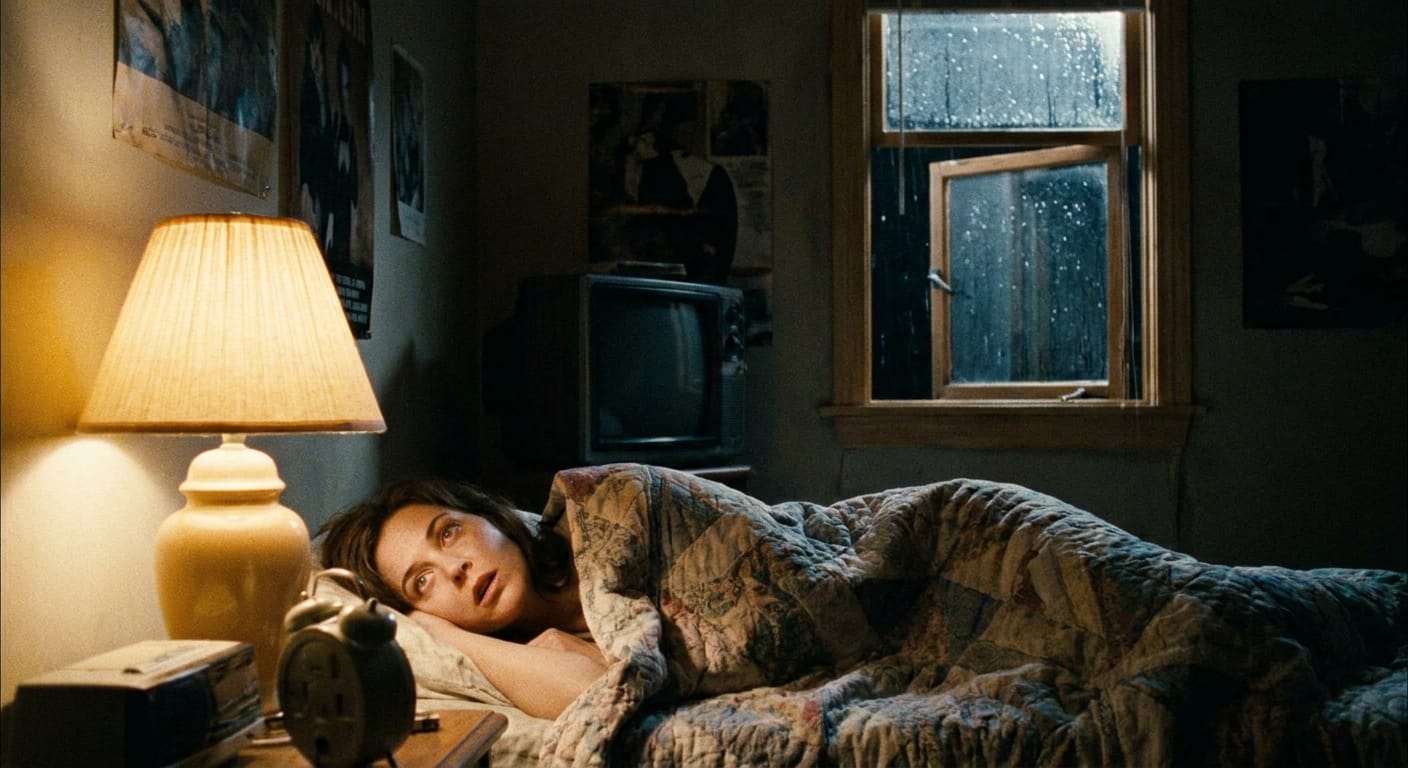
Inside, the dim bedside lamp holds its little circle of light, turning the rest of the bedroom into soft shadow. The rain doesn’t need to be seen to be vivid; it announces itself the way only nighttime rain can—steady, unshowy, absolutely sure of its pace. There’s something deeply 1990s about that kind of quiet: fewer screens tugging at the edges of attention, fewer little pings insisting life stay loud. Just a room, a lamp, a window, and a roof receiving each drop.
A house filled with rhythm
Sarah Mitchell remembers the way the sound didn’t stay confined to one spot. It “filled the whole house,” which means it moved through hallways and closed doors, slipped into corners, made each room feel connected by the same hush. The roof becomes an instrument, the rain the patient musician—no crescendo, no finale, only a rhythm that doesn’t ask anything of her except to listen.
And that’s the detail that makes this night unmistakably hers: she didn’t want to fall asleep too quickly. Plenty of people use rain as background noise to drift off; Sarah Mitchell stayed awake for it. She held herself still, not out of anxiety, but out of a kind of respect—as if sleep would be rude, like leaving a conversation before the other person is done speaking.
Context that fits the feeling, not the other way around
There’s no headline attached to this memory, no public event to anchor it. That’s part of its power. In a decade so often remembered for its big cultural noise, Sarah Mitchell’s moment is made of the opposite: a private quiet, an ordinary night made briefly ceremonial by attention.
It’s also the kind of memory that can only survive because it wasn’t forced to matter at the time. Nobody told her to record it, photograph it, turn it into proof. It simply happened, and her mind—without any practical reason—kept it. The fact that she can still feel how “constant” and “comforting” it was says something tender about her: she notices steadiness when it appears, and she knows the difference between silence and peace.
When the same rain returns
Years later, the rain that matches that old rhythm doesn’t just sound like weather to Sarah Mitchell. It sounds like a pause button. The world doesn’t actually slow down—cars still pass, schedules still wait—but the body remembers that night and offers the same doorway: be still, listen, don’t rush past the softness.
Maybe that’s why the window matters so much in her recollection. A window slightly open is an in-between state—safe but not sealed off, alone but not cut off. It’s a way of letting the outside in without surrendering the inside. And on that unremarkable night in the 1990s, with the bedside lamp dim and the roof taking the rain’s steady tapping, Sarah Mitchell found a rare kind of shelter: not from the storm, but within it.
About the Storyteller
Sarah Mitchell
Memory from 1990s