
Susan Blake and the Quiet Glow of a 1982 Living Room
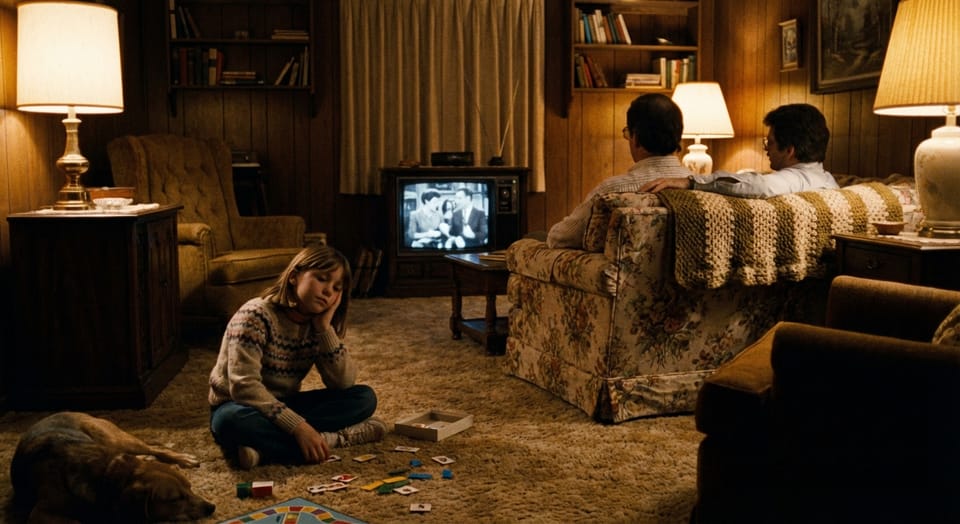
For Susan Blake, the memory that returns isn’t a birthday or a holiday or anything that would have demanded a photograph. It’s a regular night in 1982—one of those evenings that arrived softly and left the same way, but somehow stayed.
This memory is brought to you by Oh Sherri Irish Pub — Testing the partner system

This story is brought to you by
Oh Sherri Irish Pub
Testing the partner system
Visit Oh Sherri Irish Pub →Nothing special was happening—just a quiet night at home. My parents watched TV while I sat on the floor, half paying attention, half lost in my own thoughts. Looking back, those ordinary nights feel just as important as the big moments.
The Living Room That Held Everything
When Susan Blake looks back, it’s not the plot of whatever was on TV that matters. It’s the shape of the room: the living room couch where her parents settled in, the dim lamp light pooling like a small, dependable moon, and the television quietly playing as if it existed mainly to keep the silence from feeling too sharp.
She can still place herself on the floor—low to the carpet, close enough to the furniture to feel sheltered by it. Half paying attention is its own kind of attention, the kind a child has when she’s listening for safety more than for dialogue. The sound isn’t the point; the steadiness is.
1982, When “Home” Had a Sound
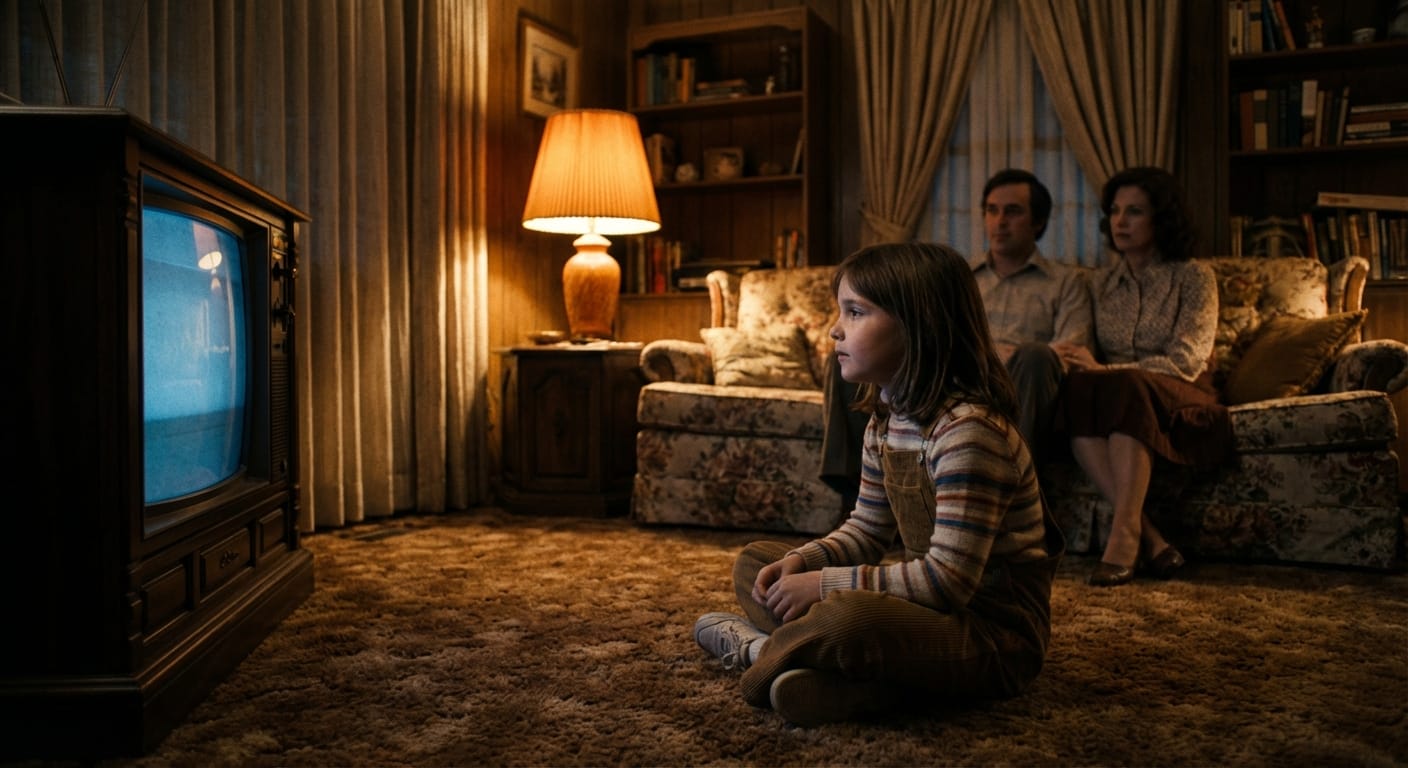
1982 had its own texture inside a house at night: the particular hush that arrived after dinner, the glow that didn’t try to brighten every corner, the sense that entertainment didn’t have to be loud to be real. The TV “quietly playing” in Susan Blake’s memory lands like a detail she didn’t realize she was collecting at the time—proof that peace can be audible.
And the lamp—dim, on purpose—suggests a family that didn’t need a spotlight on their togetherness. They were simply there. In the same room. Doing their own small versions of resting.
Half in the Room, Half in Her Thoughts
There’s something unmistakably Susan Blake about the way she remembers being split between two worlds: the shared world of her parents watching TV, and her private world forming quietly on the floor. That in-between space is where so many kids grow up without anyone noticing—the place where you start to realize you can be alone without being lonely, and thoughtful without being sad.
She wasn’t performing happiness. She wasn’t chasing excitement. She was simply absorbing the fact that her parents were right there, the couch anchored, the room familiar, the night not asking anything from her. That kind of safety doesn’t announce itself while it’s happening; it becomes obvious later, when life gets louder.
Why This Ordinary Night Stayed
What Susan Blake is naming—gently, plainly—is that the so-called “big moments” don’t actually carry all the weight. The ordinary nights do their work in the background. They build a person’s sense of what calm looks like. They teach the nervous system what it means to settle.
In her memory, nothing special is exactly the point. The TV kept playing. The lamp kept glowing. Her parents kept watching. Susan Blake kept thinking. And decades later, that quiet arrangement still feels important enough to return to—because it was real life, happening without a caption.
Your Memory on Merch
Love this memory? We can put it on a mug, t-shirt, tote bag, poster, and more! Click below to request your custom merchandise.


About the Storyteller
Susan Blake
Memory from 1982