
Steven Carter and the Green-Glowing Screen That Quietly Opened the Future (1985)
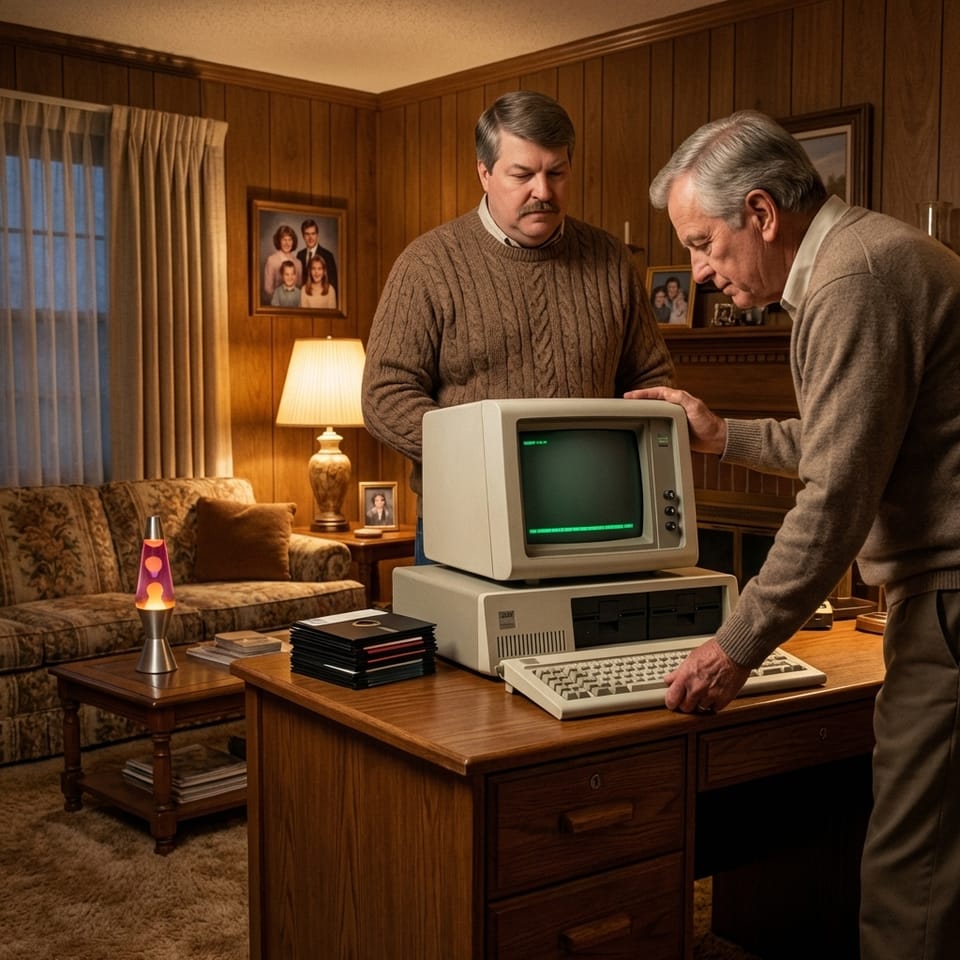
Steven Carter still remembers the weight of that moment in a way that’s hard to explain to someone who grew up with screens everywhere. It wasn’t a grand announcement or a life event with photos—just a machine carried in from his father’s work around 1985, as ordinary as a briefcase and somehow as loaded as a secret.
This memory is brought to you by Oh Sherri Irish Pub — Testing the partner system

This story is brought to you by
Oh Sherri Irish Pub
Testing the partner system
Visit Oh Sherri Irish Pub →"My father brought home a personal computer from work sometime around 1985. It had a glowing green screen and floppy disks the size of dinner plates. At first it seemed like a strange machine meant only for typing or simple games. But I remember thinking that something about it felt important. Within a few years computers started appearing everywhere—schools, offices, eventually homes. Looking back, that quiet little machine was the beginning of a whole new world."
The first thing Steven Carter saw wasn’t “technology,” not really—it was that monochrome glow. Green on black, like the machine had its own night-vision view of the world. The kind of light that doesn’t just sit in a room; it changes the room. Even if you didn’t know what a computer could become, the screen made you feel like you were standing in front of something that was awake.
And then there were the disks—big, thin, and oddly formal. Dinner-plate floppy disks are the kind of detail that sticks because your hands remember them. You don’t forget the careful way you held them, the sense that they weren’t toys even if you didn’t yet have the language for “data” or “storage.” To Steven Carter, they were proof that this machine had an inside life, that it could keep things—words, numbers, maybe whole worlds—if you treated it right.
Before “everywhere” happened
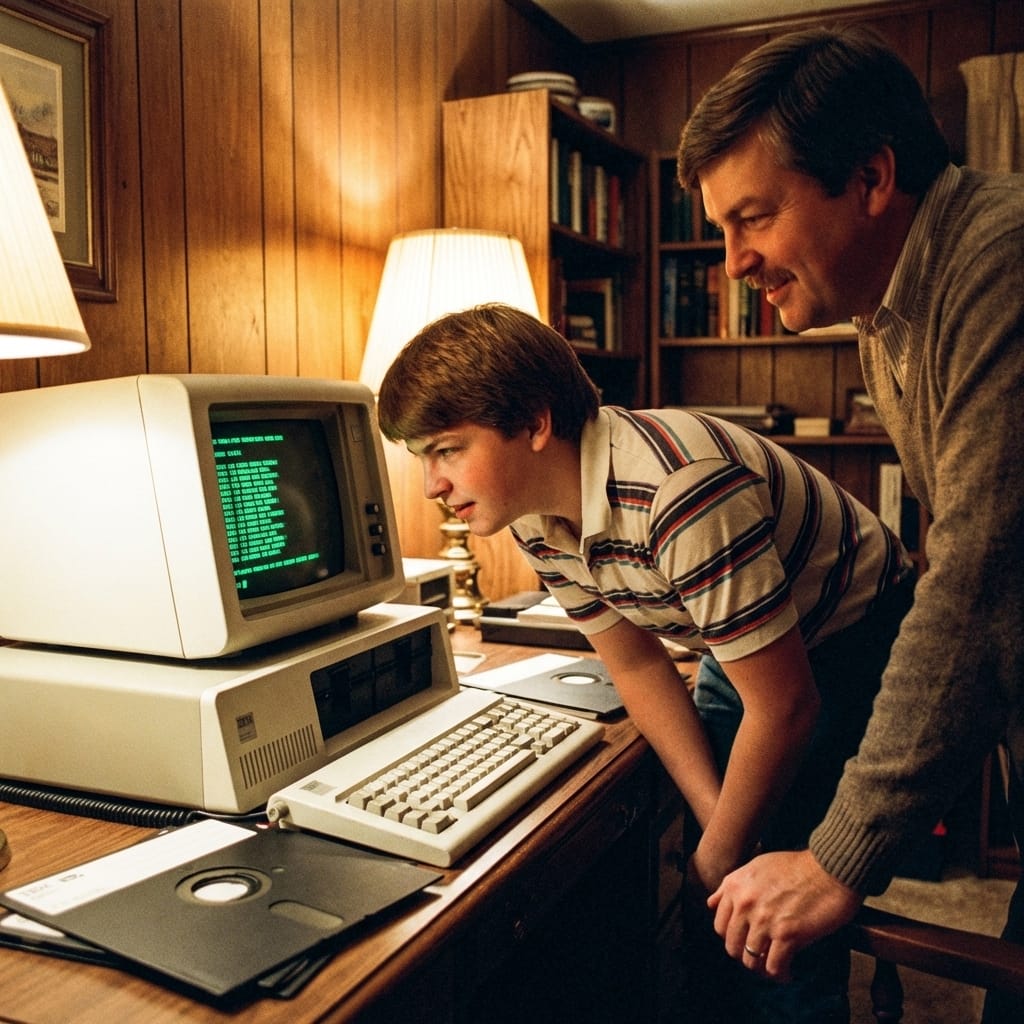
It’s easy now to compress the 1980s into a neat montage—computers arriving in schools, then offices, then living rooms—like the future marched in on schedule. But Steven Carter’s memory doesn’t feel like a montage. It feels like one quiet arrival that came first, at home, through his father’s hands, carrying the smell and authority of a workplace into a personal space.
That’s what makes Steven Carter’s phrase “from work” land with a particular weight. The early IBM personal computer wasn’t framed as a hobby purchase or a flashy household upgrade. It entered the home as a tool, a serious object, something adults relied on. And standing near it, Steven Carter could sense that seriousness—could feel that it belonged to a larger world that was already shifting.
The strange little machine that wouldn’t stay small
At first, Steven Carter saw what most people saw: typing, simple games, a curiosity that didn’t quite fit alongside the familiar furniture of the mid-’80s. But underneath that, he noticed something else—an importance that wasn’t loud. The computer didn’t need to impress anyone with graphics or color. It simply existed with a kind of calm certainty, as if it knew it was early.
There’s a particular loneliness to early technology: it arrives before the culture catches up, before your friends can trade notes, before there’s a shared script for what you’re supposed to do with it. That’s why the memory feels so personal. Steven Carter wasn’t following a trend. He was standing near the starting line without being told it was a race.
What Steven Carter recognizes now
When Steven Carter looks back, what stands out isn’t one specific game or document. It’s the way that one green-glowing screen prefigured the next few years of life: computers multiplying, quietly, until “computer” stopped being a special word and became part of the background of everything. The machine didn’t predict the future with drama. It simply introduced it—softly—into his home.
And maybe that’s why the memory holds: because it wasn’t a spectacle. It was a threshold. A father bringing home an early IBM personal computer with a monochrome monitor, a child watching the room change around a new kind of light, and the feeling—so hard to justify at the time, so obvious now—that something important had just arrived.
Photos from the Memory

Your Memory on Merch
Love this memory? We can put it on a mug, t-shirt, tote bag, poster, and more! Click below to request your custom merchandise.
About the Storyteller
Steven Carter
Memory from 1985