Scott Brooks and the Cracked Brown Vinyl Seats of a Late-1980s Yellow School Bus
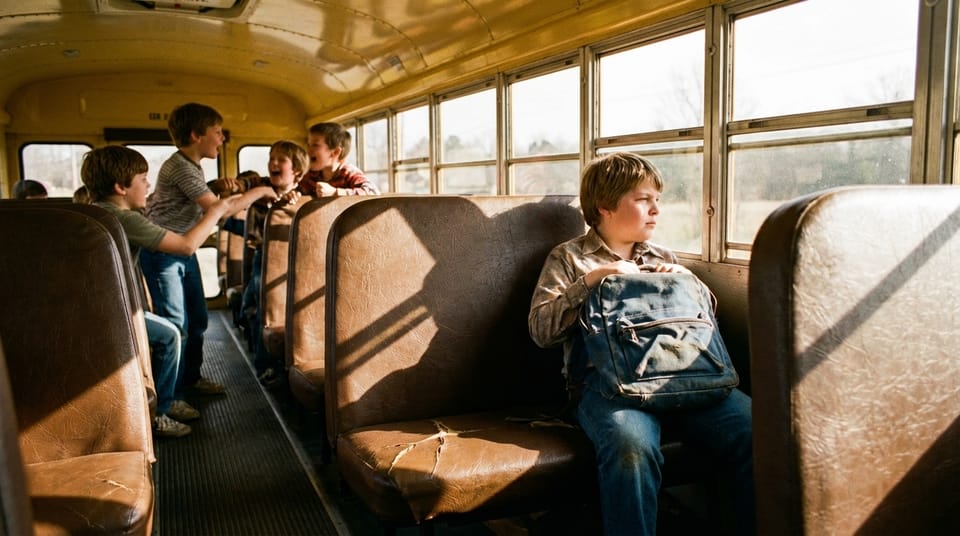
Scott Brooks can still feel it if he thinks about it long enough—the way a late-1980s morning didn’t really begin at home or at school, but in the narrow aisle of a 1983 yellow school bus where the day’s first emotions showed up uninvited: impatience, laughter, dread, swagger, sleepiness.
This memory is brought to you by Red Bike Coffee Company — Second test partner
This story is brought to you by Red Bike Coffee Company
The vinyl seats stuck to your legs in the summer and froze you in the winter. Every morning was the same chaos — someone yelling from the back, someone trying to finish homework, someone arguing about who got the window seat. The ride was only fifteen minutes, but it felt like a world of its own. Looking back, I realize most of my best childhood conversations happened between those cracked vinyl seats.
The fifteen-minute country called “the bus”
What Scott Brooks remembers isn’t a single dramatic incident; it’s the repeating truth of it. The bus as a self-contained place with its own weather, its own rules, its own little power structures—who sat where, who could shout louder, who could pretend not to care. In those fifteen minutes, you could be brave in a way you weren’t in class, or quiet in a way you weren’t at home.
The cracked brown vinyl seats were the first honest thing you touched all day. They didn’t flatter anyone. They didn’t cushion the awkwardness of growing up. In summer they clung, and you became aware of your own skin in a way that felt unfair at that hour. In winter they stole heat so fast it felt personal. Scott Brooks remembers that physical jolt because it made the ride real: no matter what you were carrying—books, lunch, a half-finished assignment—the seat always had an opinion about it.
Sliding windows, shifting alliances
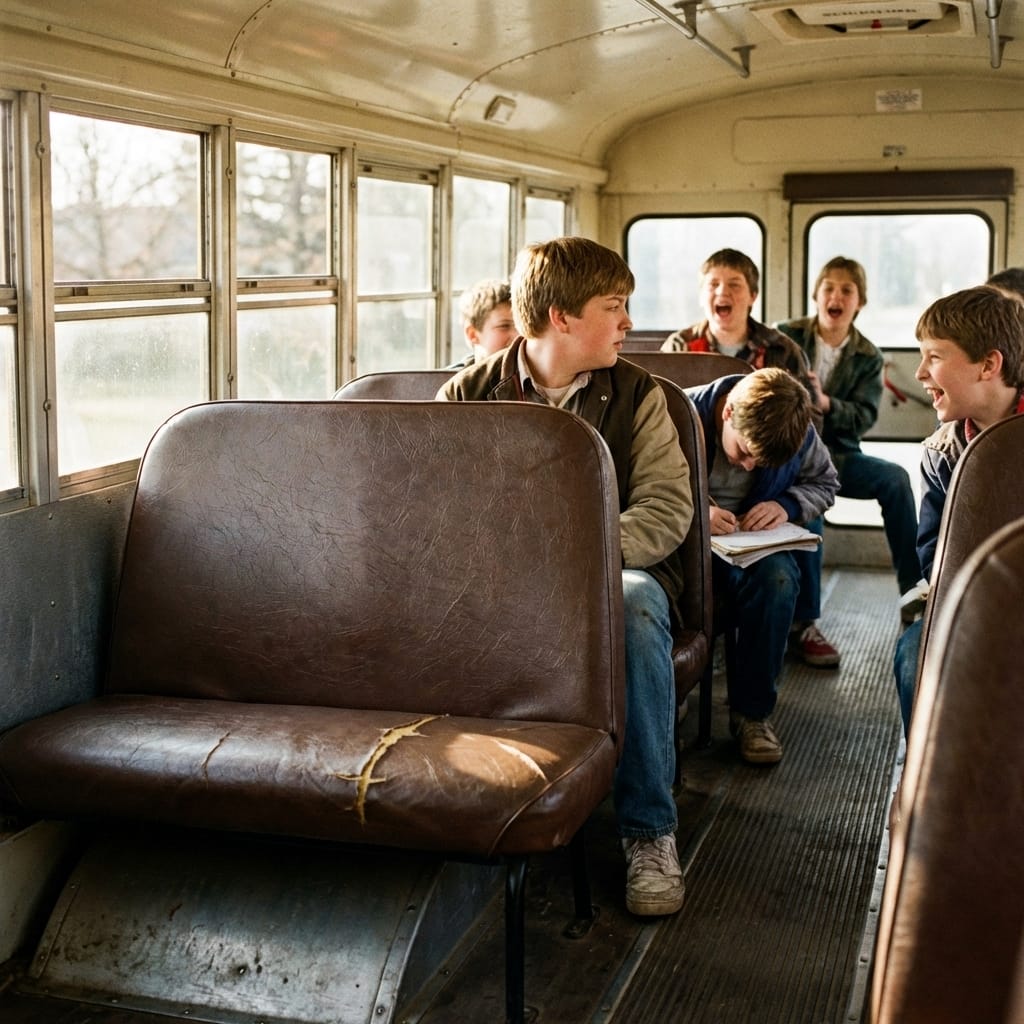
The sliding windows on that 1983 bus mattered more than people would think now. They were a privilege you could win or lose in an argument; a small rectangle of control. The “window seat” fight wasn’t really about scenery—it was about air, about being able to look away when the aisle got too loud, about having something to lean your shoulder against when your thoughts were heavier than your backpack.
Scott Brooks can still hear the morning in layers: a voice from the back trying to be funnier than everyone else, the softer urgency of someone cramming homework like it could be learned by friction, the sharpness of somebody declaring a seat as if declaring a border. And somewhere in it, Scott Brooks—listening, watching, choosing when to jump in and when to let the noise pass like telephone poles.
Why the conversations stayed
Classroom conversations get remembered as answers. Bus conversations get remembered as admissions. Between those cracked vinyl seats, kids said things they wouldn’t say into a raised hand. They negotiated friendships without realizing that’s what they were doing. They tested jokes, borrowed bravery, confessed tiny fears, and laughed hard enough to forget the time.
When Scott Brooks says his best childhood conversations happened there, it lands because the bus didn’t demand a polished version of you. It let you be unfinished. It let you be whoever you were before the bell, before the teacher, before the day decided what you were supposed to be.
Late-1980s ordinary, permanently specific
There’s nothing “famous” about a 1983 yellow school bus with cracked brown vinyl and sliding windows—except that it was Scott Brooks’s. That’s the strange tenderness of it: the most ordinary object becomes a private landmark when it’s the place you learned how to talk, how to listen, how to belong for fifteen minutes at a time.
And even now, if Scott Brooks catches the smell of warmed vinyl or hears that particular kind of morning yelling—half argument, half performance—there’s a quick internal rewind. Not back to a whole childhood, but back to that world of its own rolling forward, stop by stop, teaching him conversation the way life usually does: without announcing the lesson.
Photos from the Memory

Your Memory on Merch
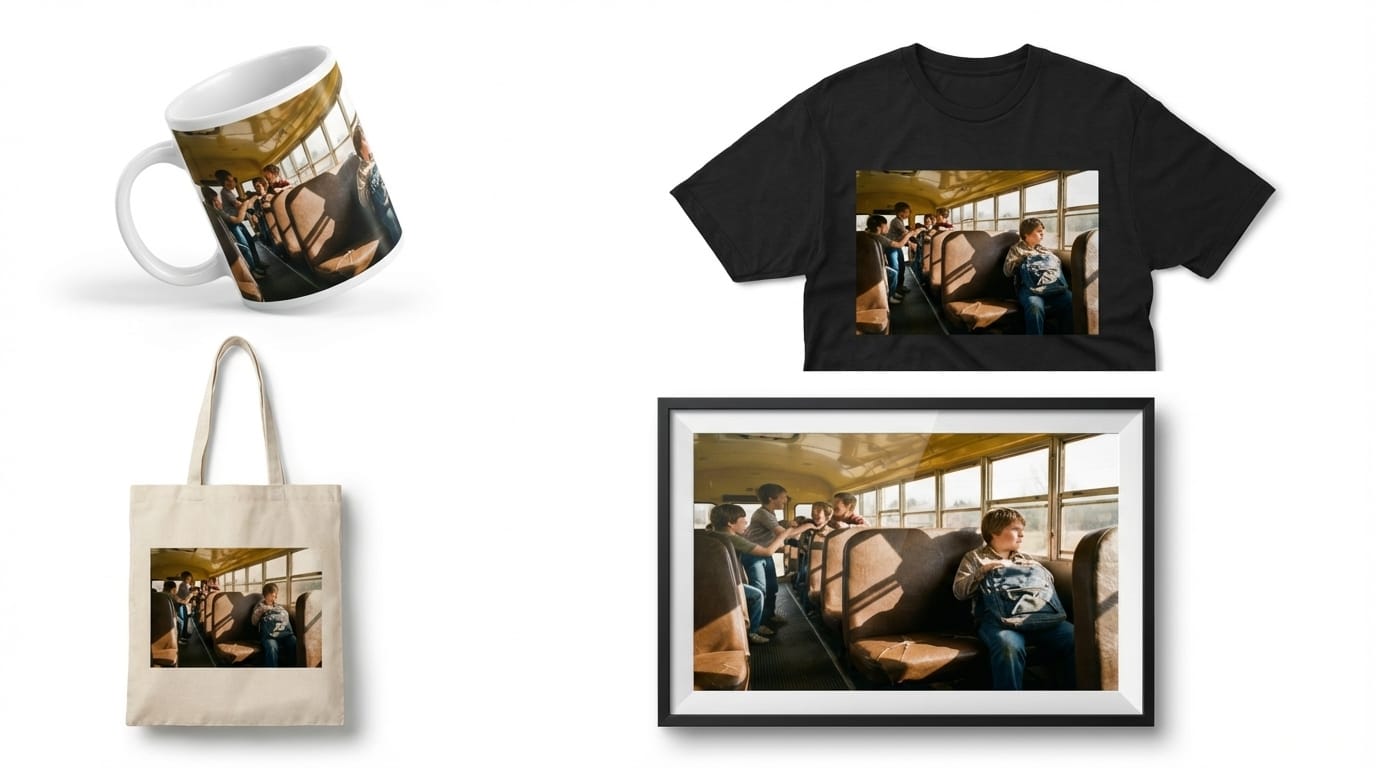
Love this memory? We can put it on a mug, t-shirt, tote bag, poster, and more! Click below to request your custom merchandise.
About the Storyteller
Scott Brooks
Memory from Late 1980s