
Saint Patrick and March 17, 1600: The Day a Solemn Feast Learned to Travel
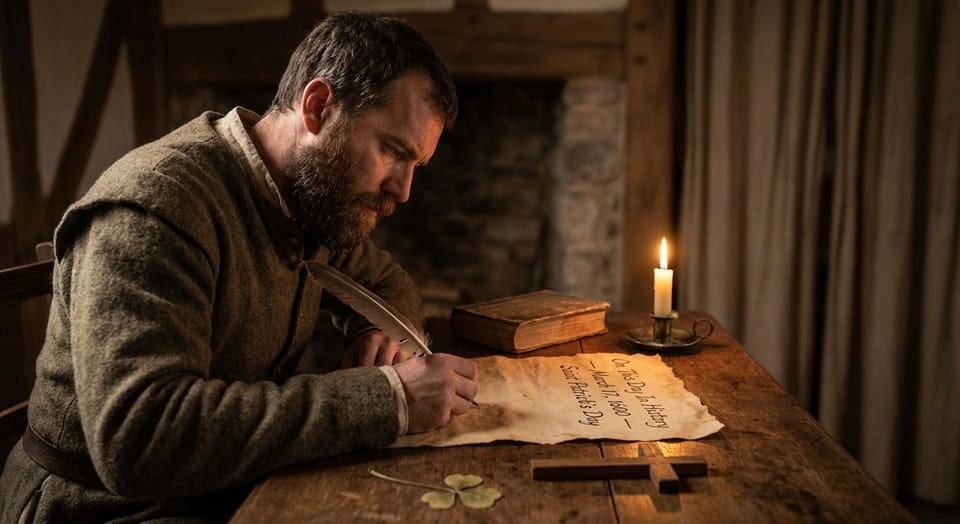
Saint Patrick has a way of holding March 17 up to the light and seeing two things at once: the hush of prayer and the sudden clatter of a table being set. In the item Saint Patrick keeps close—On This Day In History March 17, 1600 Saint Patrick's Day—there’s a specific hinge in time, a year that feels like a pin in a map. 1600 isn’t just a date to Saint Patrick; it’s the moment the day became official enough to survive strangers’ hands and faraway streets.
This memory is brought to you by Red Bike Coffee Company — Second test partner
This story is brought to you by Red Bike Coffee Company
"Saint Patrick's Day originated as a religious feast in the 9th or 10th century to honor the death of Saint Patrick, the patron saint of Ireland. While initially a solemn day of prayer in Ireland, it evolved into a worldwide cultural celebration largely due to the influence of the Irish diaspora in the United States. Key Historical Origins The Namesake: Saint Patrick was a 5th-century missionary born in Roman Britain who was kidnapped and enslaved in Ireland at age 16. After escaping, he returned to Ireland as a priest to spread Christianity, famously using the three-leaf shamrock to explain the Holy Trinity. The Date: March 17 is the traditionally accepted anniversary of Saint Patrick's death, believed to have occurred around 461 AD. Official Recognition: The day was formally added to the Catholic Church's liturgical calendar in the early 1600s. Lenten Exception: Because the holiday falls during Lent, the Church historically waived restrictions on eating meat and drinking alcohol for the day, fostering the tradition of feasting."
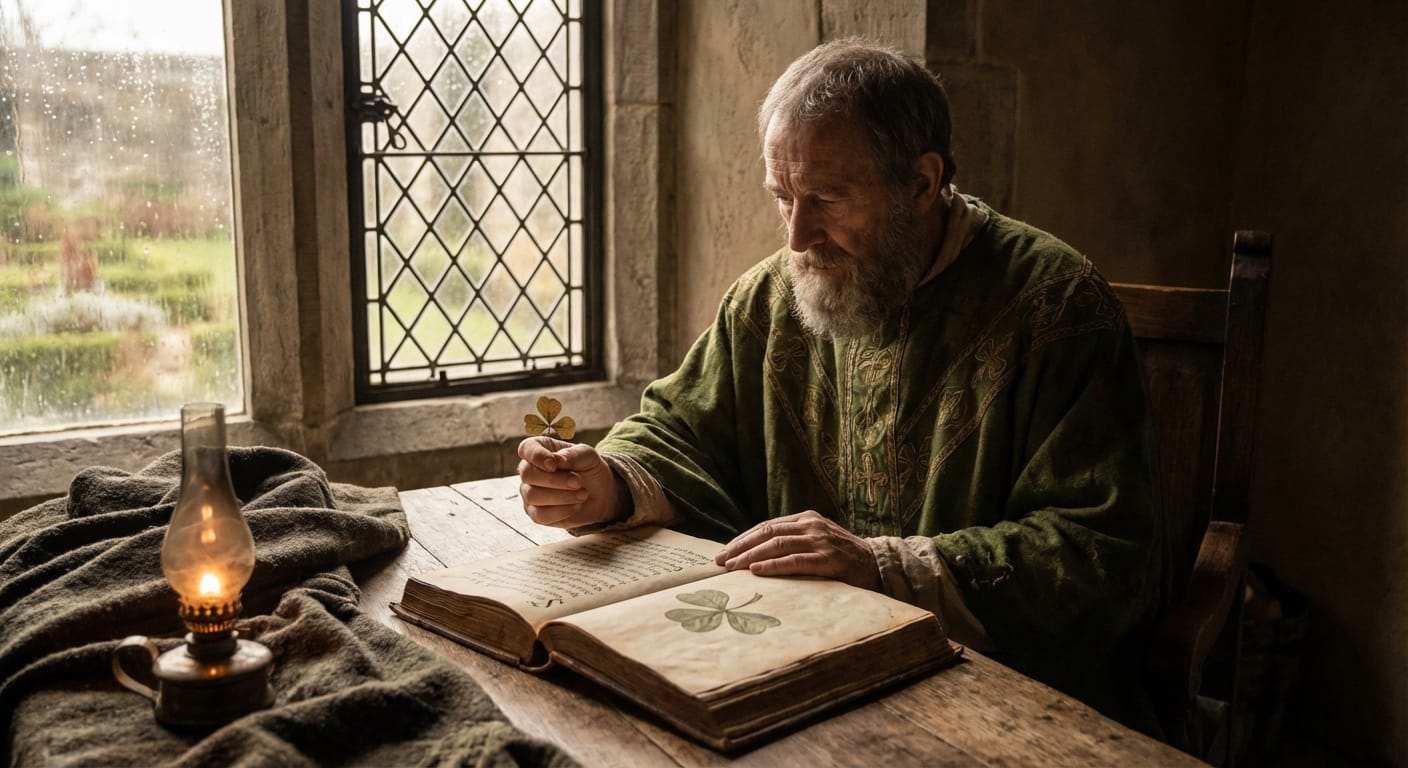
When Saint Patrick anchors the memory to “March 17, 1600,” it reads like a quiet stamp pressed into wax: the early 1600s, when the feast was placed into the Church’s calendar and made harder to lose. Saint Patrick doesn’t treat that recognition like paperwork—more like a promise. A day doesn’t become beloved because it’s loud; it becomes beloved because someone, somewhere, decided it was worth remembering on purpose.
And it’s impossible not to feel the strange intimacy of the namesake in Saint Patrick’s telling. A boy taken at sixteen. Six years of forced labor that must have turned seasons into something you count with your whole body. Then the return—not the romantic kind, but the kind that costs you, the kind where faith isn’t decorative. Saint Patrick holds that biography close because it explains why the day began with bowed heads before it ever found a crowd.
What Saint Patrick seems to cherish most is the way one small object—a three-leaf shamrock—could be made to carry a whole idea. Not as a gimmick, but as a mercy: something simple enough to fit in a palm, clear enough to survive translation. In Saint Patrick’s hands, that detail becomes a symbol of how traditions endure. They don’t endure because they’re complicated; they endure because someone can pick them up and understand what they’re meant to hold.
Saint Patrick also pays attention to March 17 as a date that refuses to stay abstract. It’s the accepted anniversary of a death, yes—but it’s also a yearly return. And Saint Patrick’s memory doesn’t gloss over the fact that this return arrives during Lent, when the body is supposed to practice restraint. The old waiver—meat allowed, drink allowed—feels to Saint Patrick like a sanctioned exhale. A single day when the rules loosen, not to encourage excess, but to make room for gratitude that has nowhere else to go.
That detail changes the emotional temperature of everything that came later. Saint Patrick sees how a solemn day could still make space for a feast, and how that feast could become the bridge that helped the day travel. When the Irish diaspora in the United States carried Saint Patrick’s Day across the ocean, it wasn’t only the prayers that fit in the luggage—it was the permission to gather, to eat, to lift a glass without shame, to say, in public, “We are still here.” Saint Patrick’s memory makes that evolution feel less like commercialization and more like survival with music in it.
Even the way Saint Patrick labels the item—On This Day In History—has its own kind of tenderness. It’s a phrase that sounds neutral until you realize what it’s really doing: insisting that this day belongs on the ledger with everything else we call important. For Saint Patrick, 1600 is the year the observance gained a spine. After that, no matter how far it wandered—from Ireland’s quiet churches to American streets—it had a date, a name, and a place to return to.
And maybe that’s the most personal part of Saint Patrick’s memory: the understanding that celebration can be an act of fidelity. That behind every parade there was once a prayer. Behind every green ribbon, a story of captivity and courage. Behind every table set a little fuller on March 17, a church calendar in the early 1600s making room for a day that refused to disappear.
Your Memory on Merch
Love this memory? We can put it on a mug, t-shirt, tote bag, poster, and more! Click below to request your custom merchandise.


About the Storyteller
Saint Patrick
Memory from 1600
Connect with Saint using the info below: