
Robert Langley and the Grainy Night the Moon Came Through the Living Room TV
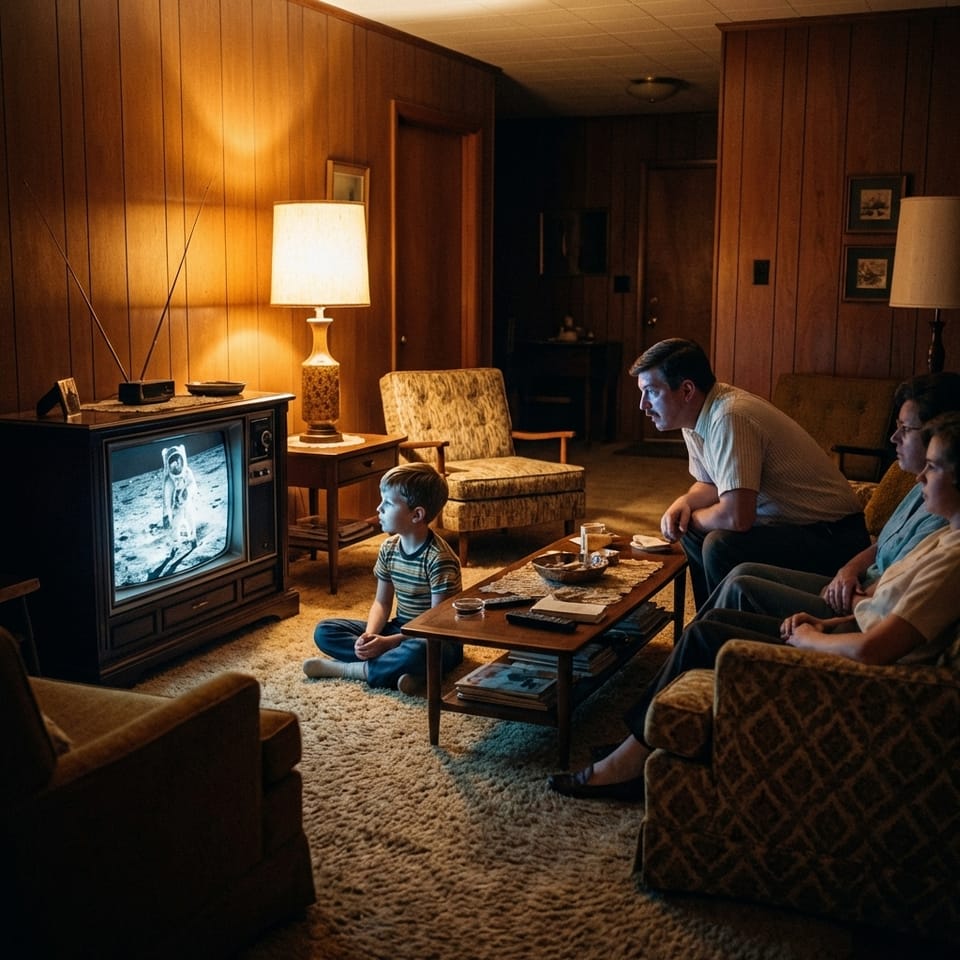
Robert Langley can still point to the exact kind of silence that filled a house on July 20, 1969—the kind that doesn’t feel empty, just crowded with attention. It lived in the living room, in the soft glow of a black-and-white television, and in the way a family forgets their own fidgeting when something too big for ordinary life starts happening in real time.
This memory is brought to you by Oh Sherri Irish Pub — Testing the partner system

This story is brought to you by
Oh Sherri Irish Pub
Testing the partner system
Visit Oh Sherri Irish Pub →"Our whole family gathered around the television that night. The picture was grainy, the sound crackled, but nobody moved from their seat. When Neil Armstrong stepped onto the moon, my father leaned forward like he might somehow see better if he got closer. I remember how quiet the room became. Even as a kid, I could tell we were watching something that would be talked about forever."
What stays with Robert Langley isn’t a perfect image—because it wasn’t perfect. The broadcast arrived with a stubborn fuzziness, as if the universe itself had to fight to deliver the moment into that living room. The black-and-white set didn’t offer glamour; it offered proof. A human figure, small and pale, moving on a distant surface while the audio sputtered like a campfire refusing to catch.
And in the middle of all that interference, Robert Langley remembers the clearest signal of the night: his father’s body language. That lean forward—so simple it could be missed—was its own kind of prayer. Not for better reception, exactly, but for closeness. As if getting nearer to the screen could shorten the impossible distance between a family’s living room and a place no one had ever stood before.
The Television That Held Everyone in Place

In Robert Langley’s memory, the television isn’t just an appliance; it’s the anchor that kept everyone arranged the same way for history. A black-and-white box in the living room, doing its best with what it had—grain, crackle, and all—while the entire family turned into one shared set of eyes. Whatever else existed in the house that night—chores, small arguments, the usual noise of living—waited politely outside the frame.
There’s something intimate about that detail: nobody moved. Not because someone told them not to, but because the room decided it together. Robert Langley, still young enough to be surprised by adult quiet, could feel the shift when talking stopped being normal and started being wrong. The silence wasn’t fear. It was reverence—unplanned, unanimous.
How Robert Langley Knew It Would Last
Some memories survive because they were joyful. This one survives because it was unmistakable. Robert Langley didn’t need the language of headlines to understand what he was seeing; his father’s lean provided the translation. Adults didn’t lean forward for just anything. They leaned forward for things you didn’t want to miss, things you wanted to be able to say you witnessed with your own eyes.
That’s the peculiar gift of that night: Robert Langley wasn’t asked to imagine the future significance of it. He felt it, right there in the hush of the living room, in the way the air seemed to tighten around the television’s glow. Even as a kid, he could tell the story would outlive the moment—traveling forward, getting repeated at tables and in classrooms, turning into one of those shared reference points people reach for when they want to name what “historic” really means.
What Remains After the Broadcast Ends
Long after the screen went dark, what Robert Langley kept was not a pristine picture of the moon—it was the feeling of belonging to a single moment with his whole family, all of them held by the same fragile transmission. A crackling sound and a grainy image were enough to make time behave differently, to slow a room down until everyone could sense they were standing on the edge of “before” and “after.”
And if Robert Langley ever thinks back to that black-and-white television in the living room, it isn’t with nostalgia for the technology. It’s nostalgia for the closeness: a father leaning in, a family staying still, and a child realizing—quietly, accurately—that some nights don’t pass. They settle into you.
Photos from the Memory

Your Memory on Merch
Love this memory? We can put it on a mug, t-shirt, tote bag, poster, and more! Click below to request your custom merchandise.


About the Storyteller
Robert Langley
Memory from July 20, 1969