Robert Jenkins and the Almost-Always-On-Fire Marshmallows of the 1980s
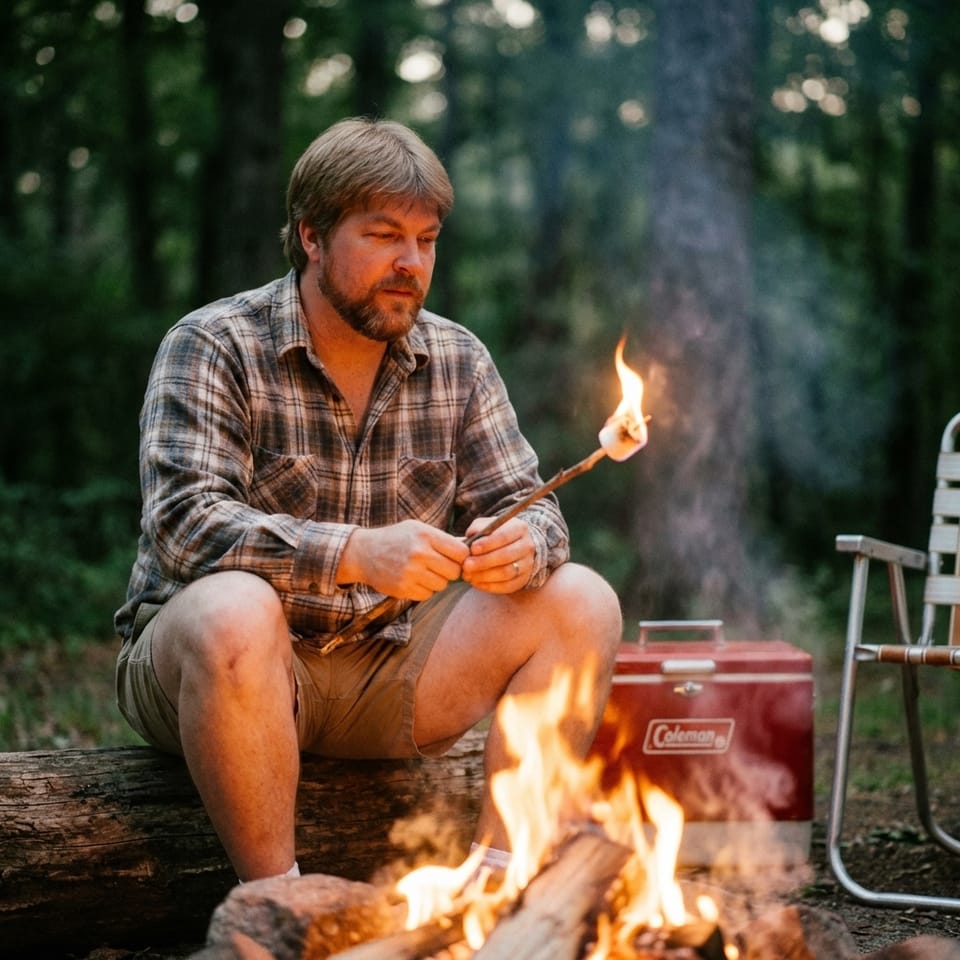
Robert Jenkins can still feel the particular confidence of a kid holding a roasting stick—like the whole night is balanced on the end of that thin, brave little branch. Summer camping trips in the 1980s had their own soundtrack: crickets keeping time, someone shifting in a folding chair, the pop of sap in the firewood. But the real cue that the evening had officially begun was the marshmallow—white and innocent for about three seconds.
This memory is brought to you by Red Bike Coffee Company — Second test partner
This story is brought to you by Red Bike Coffee Company
There’s an art to roasting marshmallows. Some people prefer them golden brown. Others accidentally set them on fire. We belonged firmly in the second category. But the smoky sweetness made every one taste perfect.
The fire didn’t judge—so neither did you
What’s tucked inside Robert Jenkins’s memory isn’t a lesson in technique; it’s the permission those nights gave. Around a campfire, there’s no grade for “proper.” There’s only the small ceremony of leaning in close enough to feel the heat on your cheeks, rotating the stick too late, and watching that sudden flare of blue-orange take over like it was waiting for your mistake.

And then comes the part that makes it yours: the way a burnt marshmallow smells before it tastes. It hits the air first—sharp, sweet, a little scandalous—like you’ve gotten away with something. Even if someone laughed, it wasn’t cruel. It was the kind of laughter that said: yep, that’s us. The second-category people. The ones who can’t quite keep the world from catching, just a bit, at the edges.
The tools were simple. The feeling wasn’t.
In the 1980s, the gear didn’t need to be fancy to feel important. The campfire was the centerpiece; the roasting sticks were the scepters. A marshmallow was cheap, but in your hand it became a tiny promise—one you could ruin, then rescue. When Robert Jenkins remembers the smoky sweetness tasting perfect anyway, it reads like a private family rule: imperfection doesn’t disqualify you. Sometimes it’s the whole point.
There’s also something about the speed of it. A perfect golden marshmallow takes patience. A second-category marshmallow announces itself in a bright, immediate whoosh. The fire makes a decision for you, and suddenly everyone is looking. You’re not invisible when a marshmallow catches fire. You’re present. You’re in the story.
What stayed after the sugar was gone
Years later, it’s not hard to imagine Robert Jenkins catching the faintest echo of those nights in ordinary places—a whiff of smoke on a jacket, a flicker in a fireplace on TV, the sweetness of something toasted just a touch too far. The memory doesn’t ask to be proven with photos or souvenirs. It lives in the senses: heat, laughter, the brittle crack of char giving way to softness.
And maybe that’s why this particular detail endures. Not because the marshmallows were the best you ever ate, but because they tasted like the way those summers felt—slightly wild, undeniably yours, and better than “perfect” precisely because you didn’t manage to make them behave.
Photos from the Memory

Your Memory on Merch
Love this memory? We can put it on a mug, t-shirt, tote bag, poster, and more! Click below to request your custom merchandise.

About the Storyteller
Robert Jenkins
Memory from Summer camping trips in 1980s