
Rachel Simmons and the door-opening sound of AIM on a glowing CRT (2002)
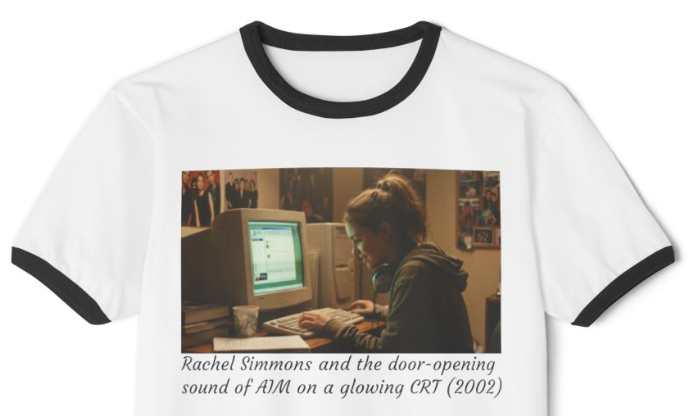
In 2002, Rachel Simmons learned how to move through the evening with one ear tuned for possibility. Homework wasn’t just homework—it was the thing that stood between her and that desktop computer, between her and the particular kind of closeness that only existed once the room went dim and the CRT monitor started to glow.
This memory is brought to you by Red Bike Coffee Company — Second test partner
This story is brought to you by Red Bike Coffee Company
“I’d rush through homework just to get online and see who was active. That door-opening sound meant everything. Conversations would go on for hours, even if we had just seen each other all day at school. It felt like a whole second social life existed inside that screen.”
When the house got quiet, the screen got busy
What Rachel Simmons remembers isn’t just that she used AOL Instant Messenger—it’s the specific way it rearranged her priorities. The rush wasn’t about being “online” in some broad, modern sense. It was about presence. The second she logged in, she could scan for names and little status hints, a quick roll call of who might be awake, bored, grounded, lonely, or ready to talk like the day hadn’t ended yet.
The CRT monitor did its own kind of lighting in that moment: a soft, humming glow that made the rest of the room feel secondary. It wasn’t like the daylight version of her life at school, where you got one shot at a hallway conversation before the bell swallowed it. Here, time stretched. Here, there was space to say the extra thing.
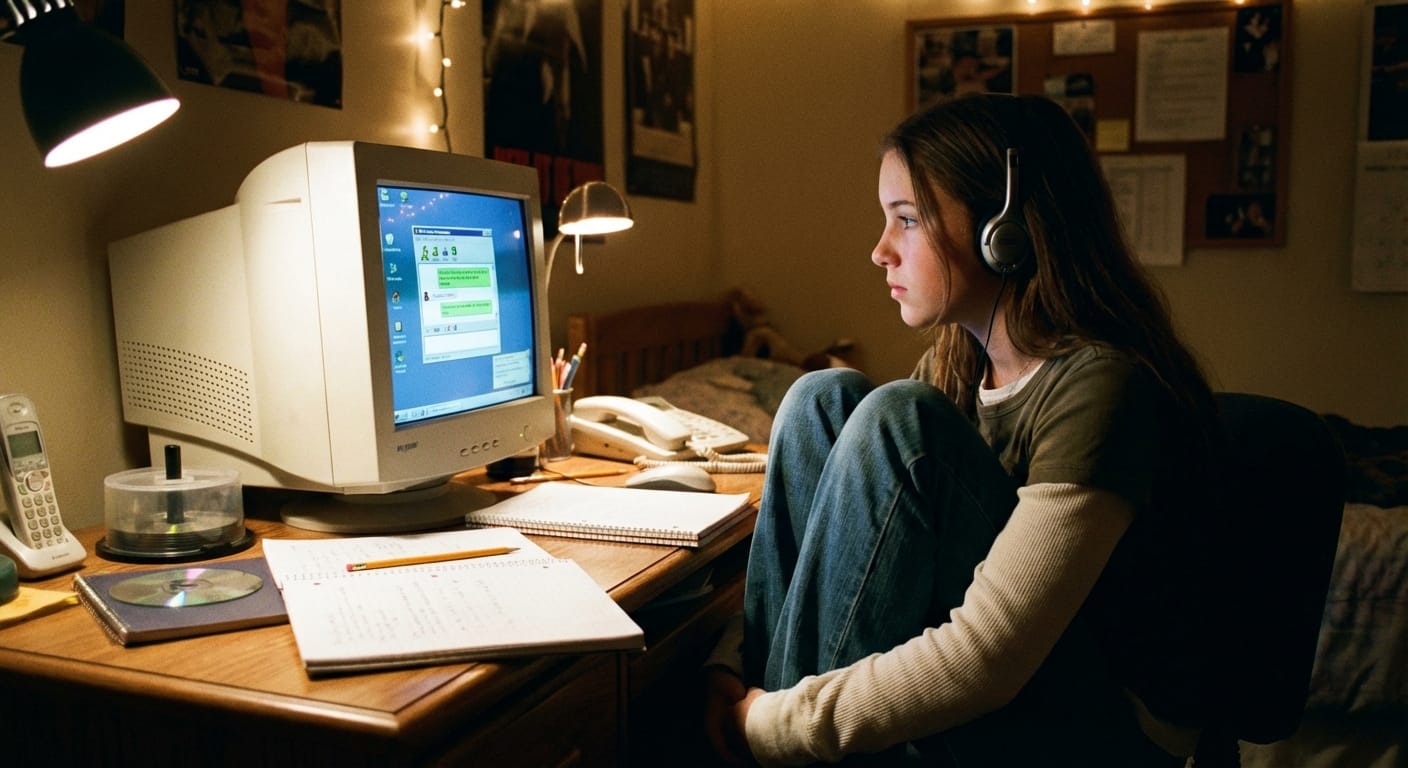
The sound that meant somebody was there
That “door-opening” sound is the detail that gives Rachel Simmons away as someone who was listening with her whole body. It wasn’t background noise—it was a small, perfect announcement that the night could change direction. Someone arrived. Someone noticed you. Someone you’d already laughed with at lunch was now choosing to step into this other room you both knew how to find.
And the miracle of it—still—was how it didn’t matter that you’d just seen each other all day. School gave you the public version of friendship: shared classes, quick jokes, a glance across a room. AIM offered a private version, typed out line by line, where you could linger without looking like you were lingering.
A second life, built out of minutes you stole back
Rachel Simmons doesn’t describe AIM as a tool. She describes it as a place. That’s what makes the memory ache: the feeling that something real lived inside that screen, something that didn’t have to compete with lockers, parents calling from down the hall, or the pressure to act unfazed.
In 2002, so much of online life still felt like you had to earn it—finishing assignments fast, negotiating for computer time, waiting through the ritual of getting connected. The effort made the reward sharper. When the chat went on for hours, it wasn’t because nothing else was happening. It was because this was what was happening.
What Rachel Simmons kept from it
Some memories fade into a general nostalgia—“the early internet,” “old computers,” “back then.” Rachel Simmons’s doesn’t. Hers is precise: the after-school urgency, the instant scan for who was active, the sound that signaled you weren’t alone, the way friendship could feel continuous—daytime at school, nighttime in messages—like you could carry the thread without dropping it.
Even now, the image is easy to hold: a desktop computer in a quiet room, a glowing CRT monitor, and Rachel Simmons leaning closer—not because she couldn’t see, but because what was happening on that screen mattered. Not in a grand way. In the most teenage way possible: in the way that makes ordinary nights feel like your real life is finally starting.
Your Memory on Merch
Love this memory? We can put it on a mug, t-shirt, tote bag, poster, and more! Click below to request your custom merchandise.


About the Storyteller
Rachel Simmons
Memory from 2002