
Patrick O’Neil and the Late-’70s Shed That Smelled Like Sawdust and Motor Oil
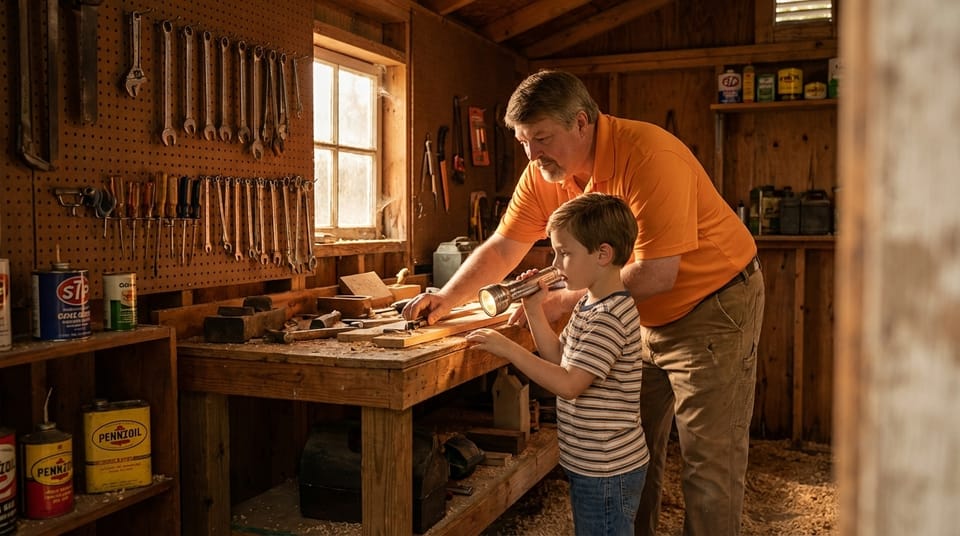
In the late 1970s, Patrick O’Neil learned to love a place that wasn’t meant to be cozy. It was a wooden backyard tool shed—small, practical, and serious about its job. But the moment the door gave and the air changed, it became something else: a room that carried his grandfather’s steadiness like a second kind of light.
This memory is brought to you by Red Bike Coffee Company — Second test partner
This story is brought to you by Red Bike Coffee Company
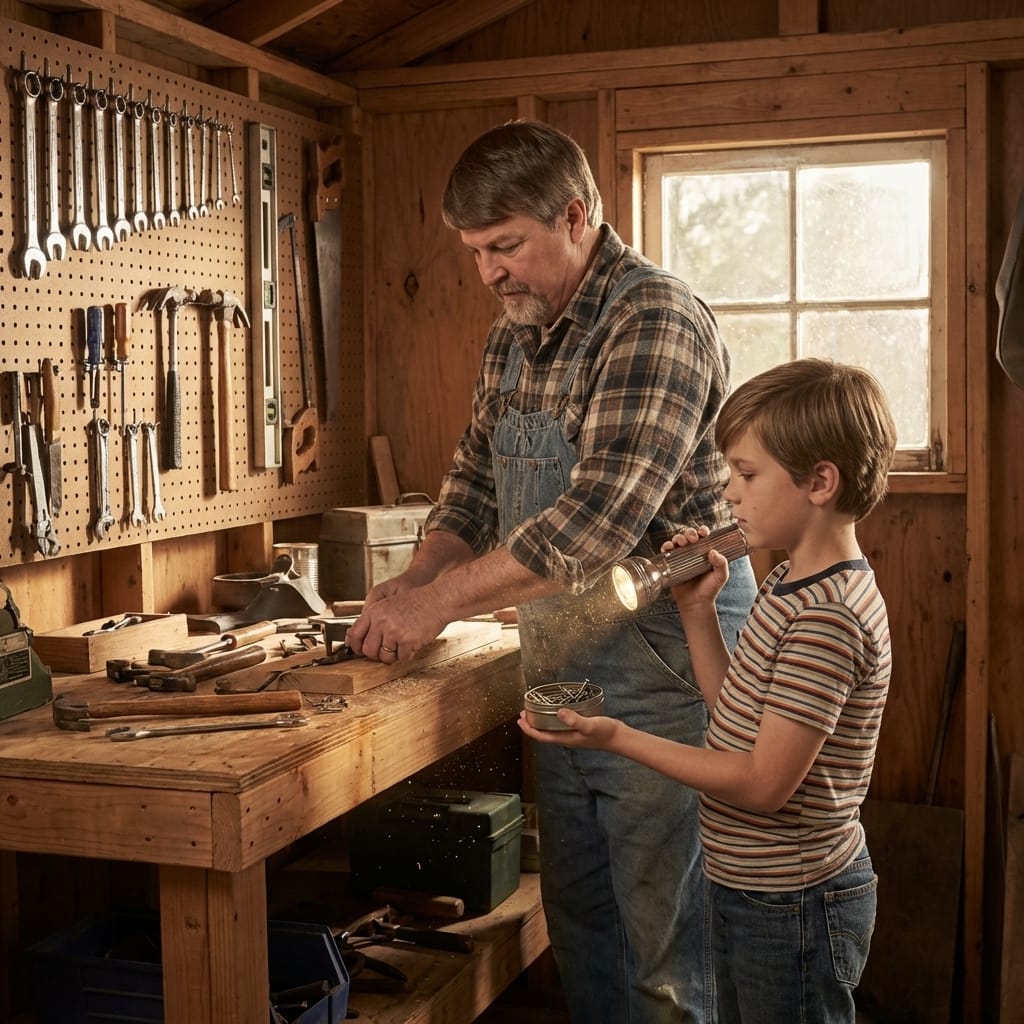
Grandpa’s shed smelled like sawdust and motor oil. Every tool hung on a pegboard in perfect order. He’d hand me small tasks — holding a flashlight or passing him nails — while explaining how things worked. I didn’t understand most of it then. But the patience he showed while teaching me stuck far longer than the projects themselves.
The pegboard wall, and a kind of quiet order
Patrick O’Neil still sees that pegboard wall the way you remember a face: not as a list of details, but as a feeling of exactness. Tools in their places, silhouettes on hooks, the whole thing like a promise that the world could be put back together if you just knew where everything belonged. The shed wasn’t trying to impress anyone. It was simply doing what his grandfather did—being reliable, being ready.
And then there was the smell. Sawdust and motor oil don’t sound like the ingredients of a childhood comfort, but in Patrick O’Neil’s memory they mix into something unmistakable—an atmosphere. The kind you can almost taste when you think about it long enough. A scent that said: you’re allowed in here.
Small tasks that were actually an invitation
Holding a flashlight is a kid’s job on paper—simple, almost disposable. But Patrick O’Neil remembers it as a role. His hands mattered. His presence mattered. Passing nails wasn’t about speed or skill; it was about being included in the sequence of steps, being close enough to the work to feel its seriousness without being crushed by it.
His grandfather explaining how things worked could have easily turned into a one-sided lecture—adult words floating over a child’s head. Instead, it became a kind of ongoing conversation where patience did the heavy lifting. Patrick O’Neil didn’t need to understand everything for the moment to count. That’s the part that lingers: not the finished projects, not the technical details, but the experience of someone choosing to slow down.
What the late 1970s sounded like in a backyard shed
There’s something distinctly late-’70s about that scene for Patrick O’Neil—the ordinary hum of life outside, and inside the shed a different rhythm: metal lightly clinking, the soft drag of wood, the pause before a tool is returned to its hook. Before “DIY” was a brand identity, it was just what a lot of people did, because fixing and building were part of keeping a household going. In Patrick O’Neil’s memory, that old wooden shed becomes a private classroom where self-reliance wasn’t a slogan—it was just how his grandfather moved through an afternoon.
The pegboard, especially, feels like its own era: a practical system you could understand at a glance. Even as a kid, Patrick O’Neil could read it the way you read a room. Order lived there. Not strictness—order. The difference matters.
What stayed after the work was gone
Patrick O’Neil admits he didn’t grasp most of the explanations at the time, and that honesty is what makes the memory ache in the best way. Because it means the lesson wasn’t really about the mechanics. It was about how it feels to be treated as someone worth teaching.
Years later, when the specifics of those projects have faded—as projects usually do—what remains is the emotional blueprint: a man making space, a boy learning that questions aren’t a burden, that mistakes aren’t an emergency, that it’s possible to work with your hands and still be gentle. For Patrick O’Neil, the shed becomes less like a building and more like a shorthand for that kind of attention—the kind you don’t recognize as rare until you’re old enough to miss it.
Photos from the Memory

Your Memory on Merch
Love this memory? We can put it on a mug, t-shirt, tote bag, poster, and more! Click below to request your custom merchandise.

Coffee Mug

Scented Candle

Magnet

Sticker Sheet

Beach Towel

Sherpa Blanket

Jigsaw Puzzle

Pin Button

Keychain

Oval Necklace

Pet Bandana

Youth Tee
About the Storyteller
Patrick O’Neil
Memory from Late 1970s