Monte and Harvey and the Seaspray Green ’57 Thunderbird on Route 66
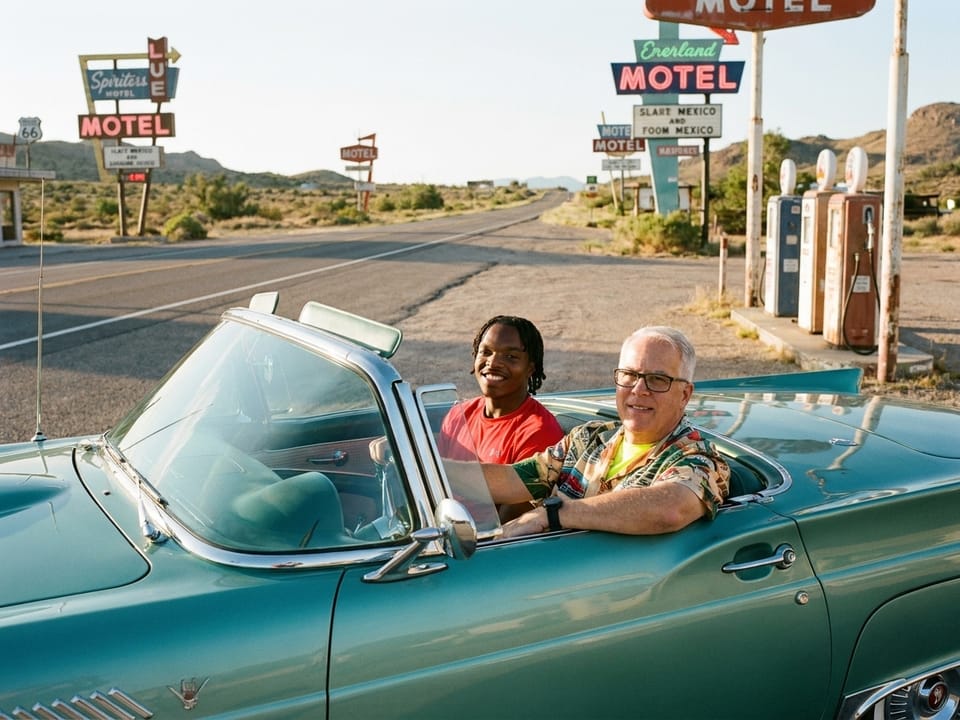
Some memories don’t sit quietly in the past—they idle there, humming, waiting for the right moment to turn the key. For Monte and Harvey, that moment was a road trip on Route 66, with the world opening up in front of Monte and Harvey’s seaspray green 1957 Ford Thunderbird convertible—the kind of classic dream car that doesn’t just carry you forward, but pulls old hopes back into your chest like a deep breath.
When Monte and Harvey say “Mother Road,” it doesn’t sound like a slogan—it sounds like a promise. Chicago behind you. Santa Monica out there somewhere, beyond heat shimmer and neon and the long, patient arithmetic of miles. And between those two points: the particular kind of quiet you only get when it’s just the two of you, a map (or an app that tries to betray you onto the interstate), and a car that makes strangers look twice at every stoplight.
That seaspray green matters. It’s not just “green,” not really—it’s sea-air and chrome, a color that seems to hold sunlight instead of reflecting it. You can almost feel how Monte and Harvey’s Thunderbird would look parked outside a drive-in or angled toward a motel sign: a 1957 shape that somehow manages to be both playful and serious, like it knows it’s beautiful but doesn’t need to announce it.
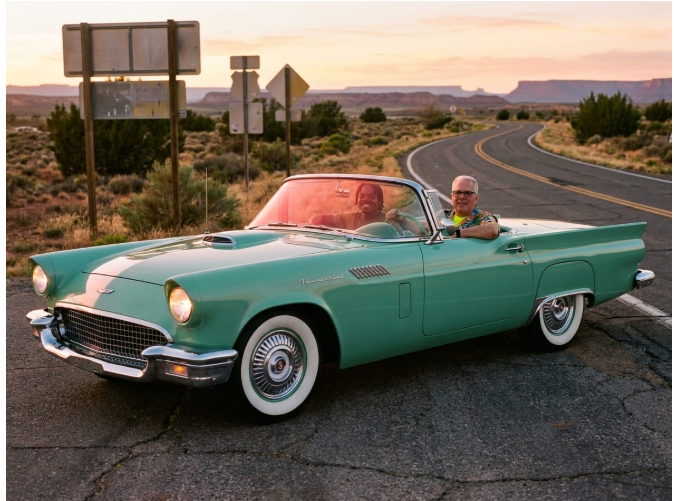
There’s something intimate about choosing a 1957 Thunderbird convertible for a trip like this. Two seats. Close conversation. No spreading out into different rows to disappear into your own thoughts. Monte and Harvey had to share the whole experience—wind and weather, silence and laughter, the small decisions that become the story: when to stop, when to push on, which weird roadside thing is worth pulling over for even if it makes you “late” to a place that isn’t going anywhere.
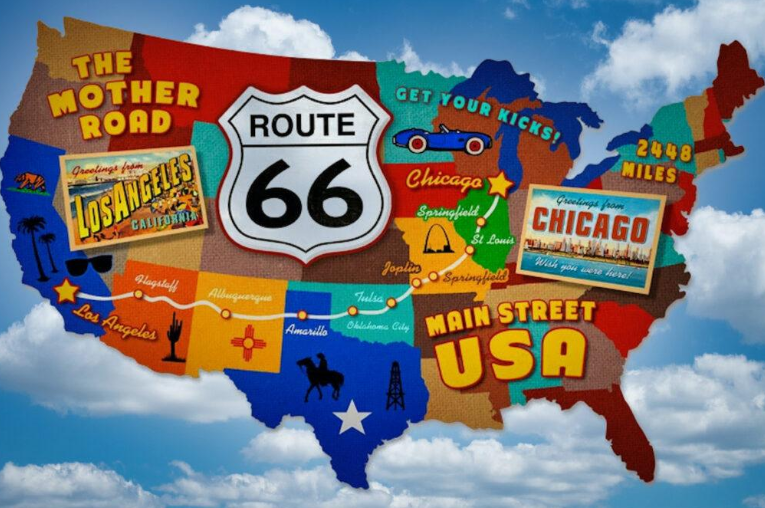
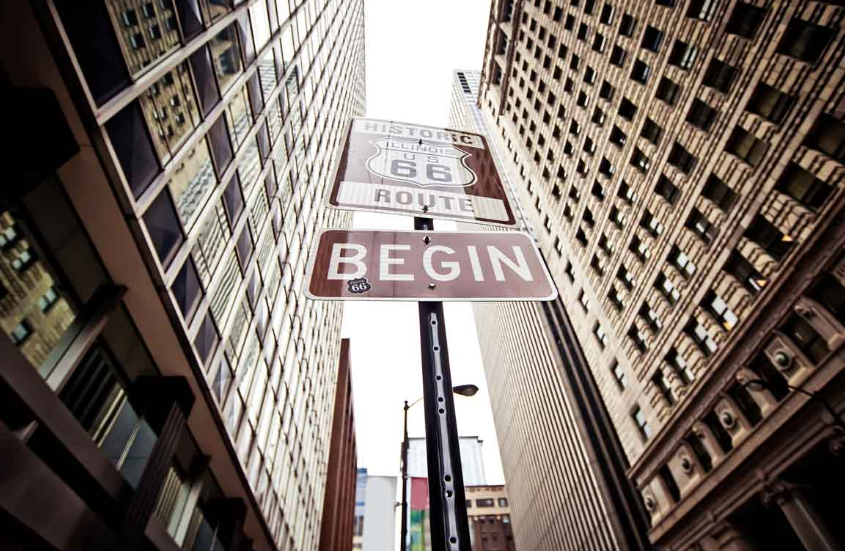
And Route 66 is made of those pull-overs. Monte and Harvey’s list reads like a string of bright beads: the “Begin Route 66” sign in Chicago, the Cozy Dog Drive In in Springfield, the Gateway Arch in St. Louis, Meramec Caverns with its vintage barn ads. Thirteen quick miles in Kansas that still count because they’re yours. The Blue Whale of Catoosa. Pops 66 glowing like a little future dropped into Oklahoma.
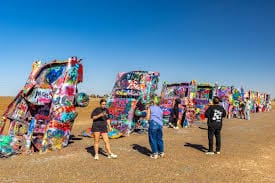
Somewhere along the way the landscape changes, and so do you. Texas gives you the Cadillac Ranch—half-buried, loud with paint and intention—and the Midpoint Café in Adrian, where the numbers say you’re exactly halfway, even if your body doesn’t believe it yet. New Mexico softens the edges with places like the Blue Swallow Motel in Tucumcari, a name that feels like it belongs to a different century, and Santa Fe’s plaza where the air carries Spanish influence and time doesn’t feel linear.
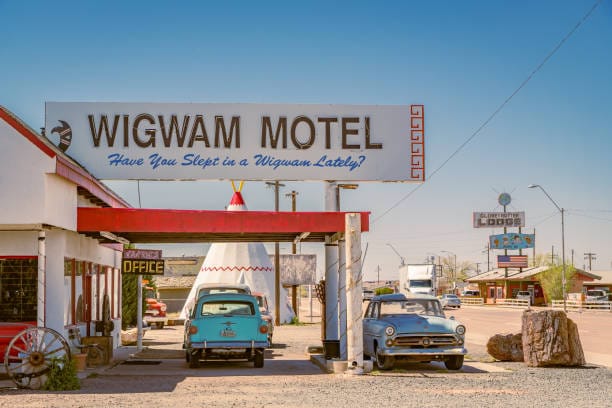
By the time Arizona rolls in, it’s not just a route; it’s a rhythm. Wigwam Motel in Holbrook, where the shape of the rooms makes you grin. Standin’ on the Corner in Winslow—because some moments you can’t skip, even if you’ve heard the song a thousand times. Williams sitting there like a gateway, as if the Grand Canyon is a secret you have to be properly introduced to.
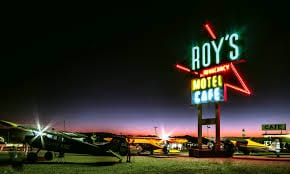
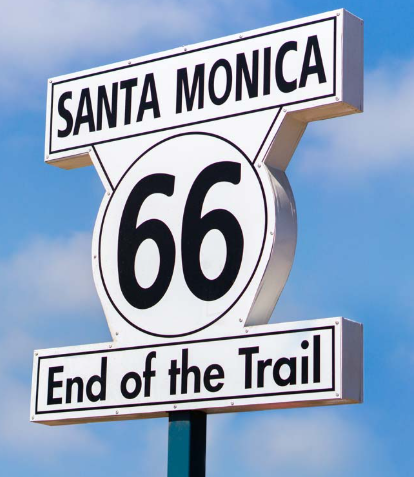
And then California, where the romance gets sharper around the edges. Roy’s in Amboy, desolate in a way that feels honest. The “End of the Trail” sign at Santa Monica Pier, where the Pacific is waiting and the whole trip collapses into one strange thought: We really did it. Monte and Harvey didn’t just drive across eight states—they arrived at a line people talk about, and made it personal.
The Thunderbird itself is part of why the memory lands so hard. The 1957 “Baby Bird” isn’t merely a classic; it’s a whole attitude in metal—elongated fins, sleek grille, that unmistakable integrated rear bumper exhaust. It’s a car designed for being seen, yes, but also for making the driver feel seen—like your life has a soundtrack and the highway is willing to play it.
Monte and Harvey’s details carry the weight of real attention: the 312 cubic-inch Thunderbird Special V8, the kind of power that doesn’t need to prove anything but can still surge when the road opens up. The spare tire moved into the trunk on the ’57, which is the sort of small, practical improvement you only appreciate when you’re actually living out of that trunk. Even the “two-top” luxury—soft top for the long, blue stretches; removable fiberglass hardtop when the weather or mood shifts—feels like a metaphor for the way a trip changes you day by day.
It’s easy for people to talk about Route 66 like it’s a museum you drive through. But Monte and Harvey didn’t treat it like that. Their memory holds the living part: the fact that even though the road was decommissioned, most of it is still drivable if you care enough to find it. That “if” is everything. It means Monte and Harvey weren’t chasing the fastest way west. They were choosing the version of the country that still has hand-painted signs, old alignments, and the feeling that you’re not just traveling—you’re participating.
Maybe that’s why the mention of the 2026 centennial hits like a little bell. Not because Monte and Harvey need a celebration to validate what they did, but because it reminds you time keeps moving, even for roads that are supposed to be timeless. Their trip sits in that sweet spot—personal, not widely indexed, not performed for an audience. Just two men, a dream car in seaspray green, and a decision to follow the old path on purpose.
Photos from the Memory


About the Storyteller
Monte and Harvey
Memory from 1957
Connect with Monte using the info below:
https://www.facebook.com/silver.fox.9862/