
Michael Donovan and the Night the Soviet Flag Came Down on TV
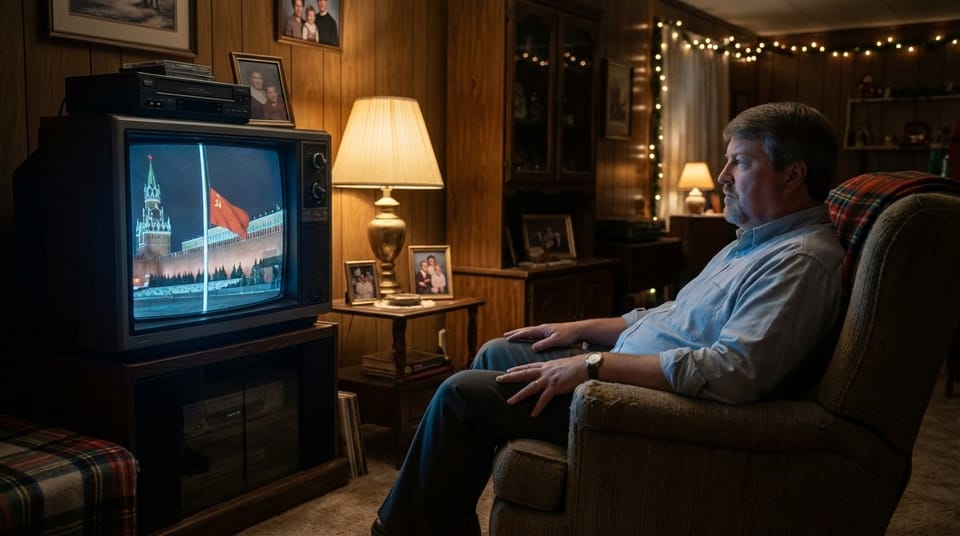
Michael Donovan didn’t plan on witnessing the end of an era. It just arrived the way late-night television does—half-lit, quiet around the edges, slipping into the room while the rest of the world was already starting to fall asleep.
This memory is brought to you by Red Bike Coffee Company — Second test partner
This story is brought to you by Red Bike Coffee Company
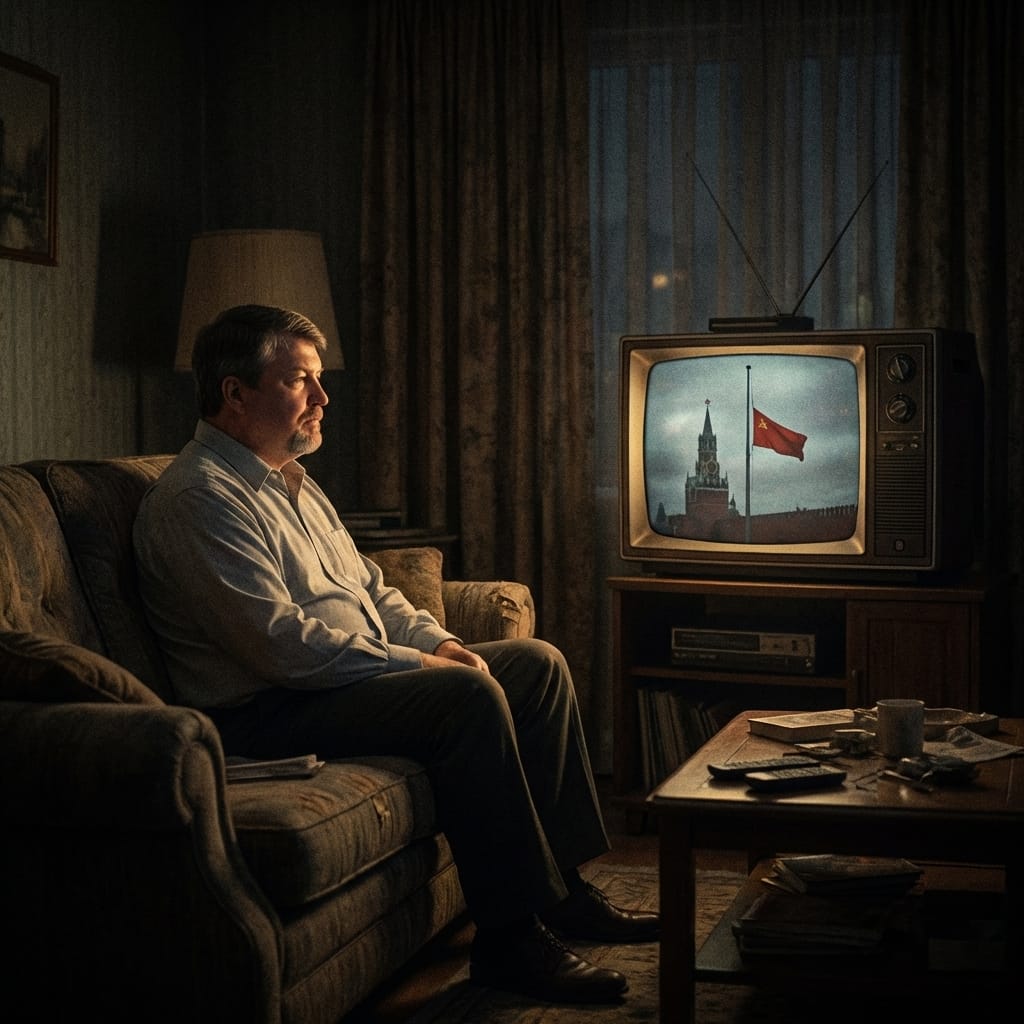
I remember watching the news late at night when they showed the Soviet flag being lowered for the last time over the Kremlin. For most of my life the Cold War had been this looming thing adults talked about. Suddenly it was ending. It felt strange—like a chapter of the world’s story had quietly closed.
The glow of the TV, and a soundless kind of history
That’s the part that sticks with Michael Donovan: not a parade, not fireworks, not even the kind of triumphant music television sometimes adds when it wants to tell you how to feel. Just the news, late at night, and a flag coming down—slow and final—over a place that had always seemed impossibly far away until it wasn’t.
A television broadcast is such a small object to carry something so huge. But that’s what it became in December 1991: a little rectangle of light that could hold the Kremlin and the weight of decades. Michael Donovan watched it the way you watch something you didn’t know you were waiting for—trying to understand why your chest feels tight when your brain is saying, This is just a clip on the news.
What the adults left in the air
For Michael Donovan, the Cold War wasn’t a daily headline so much as a background weather system. It lived in the adult voices around him—serious tones, half-explanations, the sense that there were rules you didn’t fully know but still had to obey. It was “looming,” the way he remembers it, and that word tells on the feeling: you can’t argue with something that large; you just learn to live underneath it.
So when the broadcast showed the Soviet flag being lowered for the last time, the shock wasn’t only political. It was personal. Something that had always felt permanent—something that seemed like it had been stitched into the world—was suddenly capable of ending on an ordinary night, on an ordinary TV, while life in his own home remained still.
December 1991, and the quiet way chapters close
The footage Michael Donovan saw was the kind that newsrooms understood as symbolic: a single image that says what paragraphs can’t. The flag descending marked the dissolution of the Soviet Union, and even if you didn’t know every detail, you could read the meaning in the motion—down, gone, finished.
What Michael Donovan describes isn’t excitement so much as strangeness. That’s an honest emotion, and a rare one to see reflected in history books. “It felt strange,” he says, and you can almost hear the room around him—the late hour, the softened volume, the feeling of watching the world turn a page without making a sound.
After the screen goes dark
The older Michael Donovan gets, the more that kind of moment makes sense: not the headline, but the feeling of a before-and-after happening without permission. The Cold War, in his memory, was something adults talked about—so its ending didn’t arrive as a debate or a policy shift. It arrived as an image on television that made him realize that the grown-up world he’d been listening to could change while you sat there, simply watching.
And maybe that’s why the flag-lowering stays with him. Not because it was loud, but because it wasn’t. Because it proved that history doesn’t always announce itself with a bang. Sometimes it just lowers a flag in the middle of the night, and you sit on the other side of the screen feeling, for the first time, the exact weight of the word ending.
Photos from the Memory

Your Memory on Merch
Love this memory? We can put it on a mug, t-shirt, tote bag, poster, and more! Click below to request your custom merchandise.


About the Storyteller
Michael Donovan
Memory from December 1991