
Marty Turner and the Warm 1993 Mall Photo Booth Strip Tucked in a Yearbook
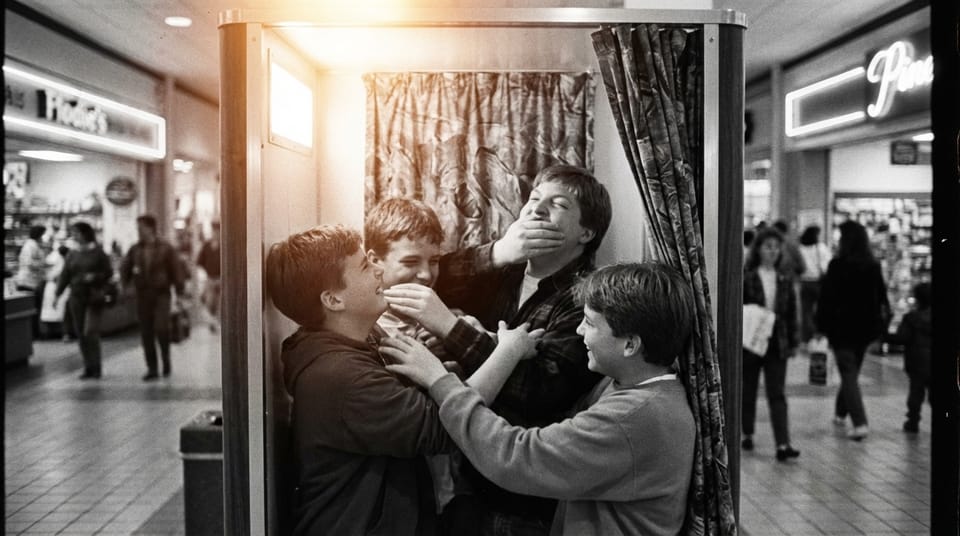
Marty Turner still keeps proof of a very specific kind of teenage bravery: the kind that happens when you pretend you’re not nervous by laughing louder than you mean to.
This memory is brought to you by Oh Sherri Irish Pub — Testing the partner system

This story is brought to you by
Oh Sherri Irish Pub
Testing the partner system
Visit Oh Sherri Irish Pub →We crammed four teenagers into a booth clearly built for two. The curtain closed. We panicked. We posed. We laughed too hard between flashes. The photo strip came out warm, slightly overexposed, and perfect. I still have it tucked inside an old yearbook.
1993, in a booth that didn’t have room for what you were becoming
In 1993, a mall photo booth was a tiny mechanical dare. You stepped inside as one version of yourself—the one who walked past storefront windows and tried not to look at your own reflection too long—and you stepped out with four frames that caught what you couldn’t say out loud. For Marty Turner, it wasn’t about looking cool. It was about the moment the curtain shut and the world narrowed down to knees knocking, shoulders pressed together, and the sudden awareness that time was about to start recording.
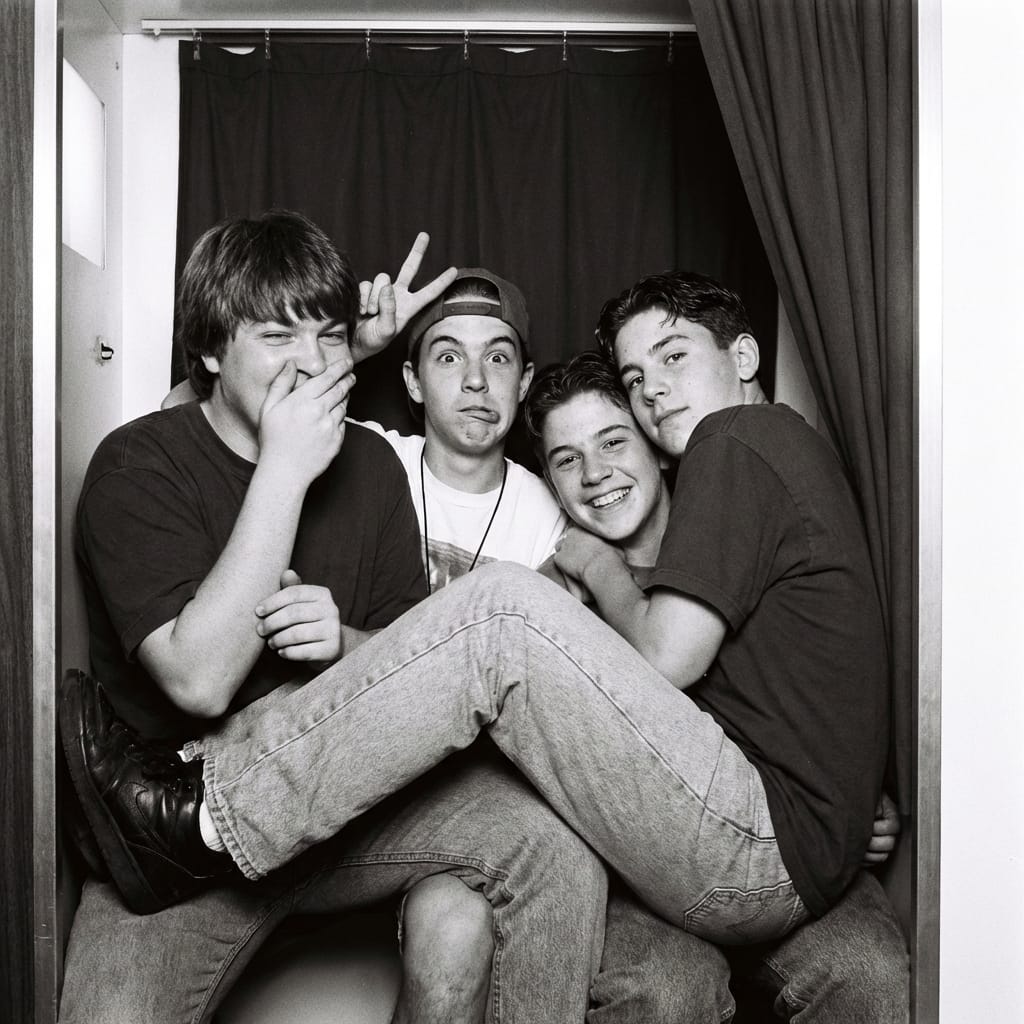
The booth was “clearly built for two,” which is exactly why four teenagers went for it. There’s a particular teenage logic to that—if the space is too small, then no single person has to carry the full weight of being seen. Marty Turner didn’t just fit into that booth; Marty Turner disappeared into the group, into the closeness, into the decision to make a joke out of the panic before the camera could catch anything too honest.
The sound of the flash, the heat of the strip
The best part is how fast it all happened. The curtain closing wasn’t gentle—it was a hard little finality, like a door clicking shut on the rest of the mall. Then the scramble: faces rearranging themselves, a shared fear of coming out looking “wrong,” hands somewhere they shouldn’t be because there simply wasn’t anywhere else for them to go. Marty Turner remembers the laughing “too hard,” and that detail feels like the truest thing: the laughter that spills out when you can’t decide if you’re having fun or falling apart.
And then—warmth. That little strip arriving not as an image on a screen but as an object with heat still in it, black-and-white and slightly overexposed. That imperfection is the point. Overexposed means the light won. It means the moment didn’t sit still for the camera; the camera had to chase it. Marty Turner calls it perfect because perfection, in that booth, had nothing to do with symmetry or flattering angles. It was perfect because it told the truth about how it felt.
Why the yearbook became its hiding place
Marty Turner didn’t pin it to a wall or frame it into adulthood. It went inside an old yearbook—pressed between pages meant for signatures and end-of-year promises. That choice makes its own kind of sense. A yearbook is already a container for versions of you that don’t exist anymore, and tucking the strip there turns it into a secret bookmark: a quiet way of saying, this is where that day lives, without having to explain it to anyone who happens to walk past.
Years later, the photo strip still does what it did the first time it slid out of the machine: it collapses the distance. Marty Turner doesn’t have to reconstruct the whole day—the stores, the food court, the aimless walking. All it takes is those four frames and the remembered pressure of four teenagers in a space meant for two, trying to look fearless while time snapped its proof.
Photos from the Memory

About the Storyteller
Marty Turner
Memory from 1993