
Mark Reynolds and the Night a Brick Phone Made the World Feel New (1994)
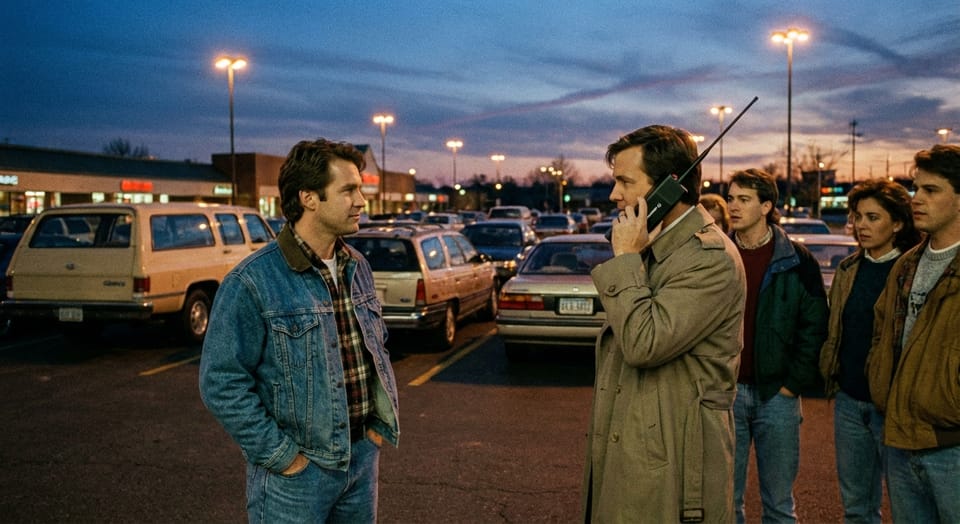
Mark Reynolds still remembers the exact kind of attention that silence can draw—how an ordinary parking lot can suddenly feel like a stage when a sound arrives that doesn’t belong there yet. In 1994, the future didn’t slip politely into your pocket. It arrived with weight, an antenna, and the unmistakable confidence of something that was never meant to be subtle.
This memory is brought to you by Red Bike Coffee Company — Second test partner
This story is brought to you by Red Bike Coffee Company
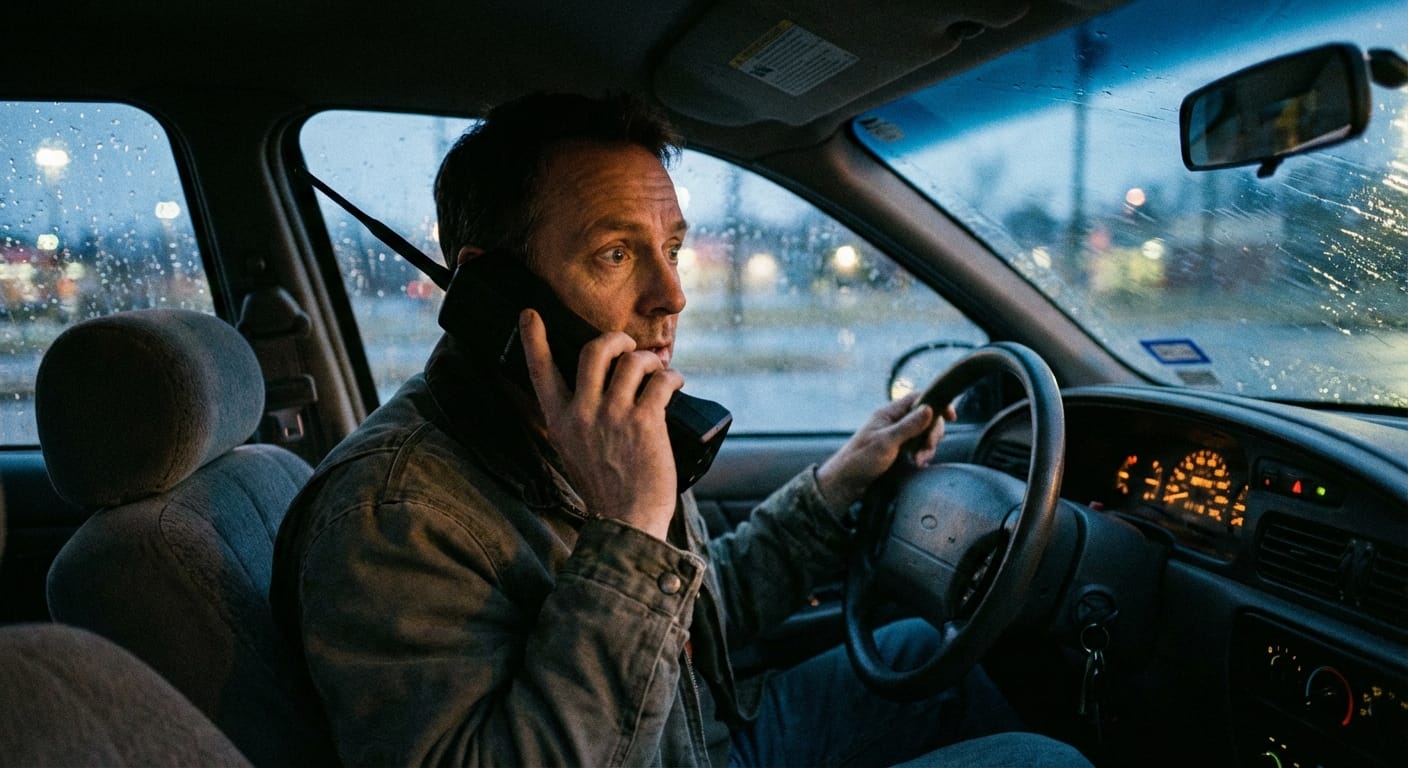
The first mobile phone I ever saw looked more like a piece of equipment than something you’d casually carry. It was bulky, heavy, and had an antenna you had to pull out to get a signal. My boss had one, and when it rang for the first time in the middle of a parking lot, everyone turned to look. It felt futuristic—like something out of a movie. Eventually, I got one of my own. Calls were expensive, so you kept conversations short and to the point. There was no texting, no apps—just the ability to reach someone when you needed to. I remember making a call from my car one evening just to try it out. Sitting there, hearing the dial tone without being near a landline, felt almost unreal. It wasn’t convenient the way phones are now, but it was the beginning of something huge. At the time, we didn’t realize we were carrying the first version of something that would eventually connect the entire world.
The Parking Lot Moment
What stays with Mark Reynolds isn’t just the phone itself—it’s the way the world reacted to it. That first ring didn’t simply interrupt the day; it re-ordered it. People looked up. Heads turned. A small crowd formed without anyone deciding to. For a second, the parking lot became a movie set and Mark Reynolds was standing close enough to the prop to feel the electricity of it.
The device in Mark Reynolds’s memory wasn’t trying to be friendly. It was black-cased, square-shouldered, and unapologetically physical—keypad buttons you could press with certainty, an external antenna you had to pull out like you were beginning a task. It made sense that it belonged to a boss first. It read, immediately, as authority and access.
Owning the Future, Paying by the Minute
When Mark Reynolds eventually got his own early Motorola “brick” cell phone, the feeling shifted from spectacle to discipline. The miracle came with a meter running. Every call had a little gravity to it—something you planned, something you kept tight, something you ended as soon as the point was made. Not because Mark Reynolds didn’t have more to say, but because the technology demanded respect in dollars and minutes.
And because there was no other way to use it. No texting to soften the edges of conversation. No apps to make it feel like entertainment. What Mark Reynolds carried was pure function: a direct line, available only when you chose to pay for it.
A Dial Tone in the Car
The image that lingers most vividly is Mark Reynolds alone in his car one evening, calling just to prove to himself it worked. Not to solve a crisis. Not because anyone needed him right then. Just because something inside him needed to hear that tone—the familiar start of a call—arrive from nowhere.
That’s the part that feels almost tender now: Mark Reynolds, sitting still, letting a new kind of possibility fill the small space of the driver’s seat. The dial tone wasn’t loud, but it was a doorway. It meant the old rule—stay near the wall phone, stay near the cord, stay near the house—was starting to loosen.
What Mark Reynolds Didn’t Know Yet
In 1994, Mark Reynolds wasn’t carrying a lifestyle. He was carrying a tool—one that felt a little strange in the hand and a little too heavy to forget. The antenna was a reminder that the signal had to be coaxed. The keypad was a reminder that every number mattered. It didn’t blend into the day; it announced itself.
That’s why Mark Reynolds’s memory lands the way it does: it captures the moment before we took all of this for granted. Before constant connection became background noise. Back when simply reaching someone—right then, from a car, without a landline anywhere near—felt like stepping into a new era and realizing your shoes could stand on it.
And maybe that’s the quiet ache inside the story Mark Reynolds tells: the knowledge that something enormous began as a small, almost unreal dial tone—heard alone, in a parked car, as if the future had finally picked up.
Your Memory on Merch
Love this memory? We can put it on a mug, t-shirt, tote bag, poster, and more! Click below to request your custom merchandise.


About the Storyteller
Mark Reynolds
Memory from 1994