
Karen Mitchell and the Classroom TV That Went Silent on Challenger Day
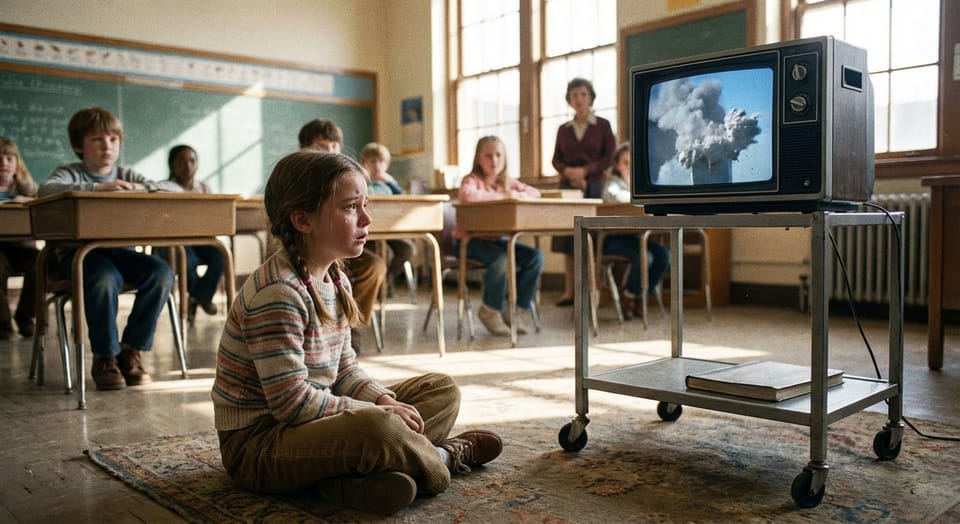
Karen Mitchell can still see that classroom television the way you remember certain objects more clearly than entire rooms—its boxy shape, the glow on the glass, the sense that something important was about to happen. On January 28, 1986, it wasn’t just a break from lessons. It was a moment your teacher handed to you like a gift: history, live, arriving through rabbit ears and a rolling cart.
This memory is brought to you by Oh Sherri Irish Pub — Testing the partner system

This story is brought to you by
Oh Sherri Irish Pub
Testing the partner system
Visit Oh Sherri Irish Pub →Our teacher had turned on the television so we could watch the launch live. Everyone was excited, especially because a teacher was going to space. When the shuttle broke apart in the sky, the room went silent. Even as kids, we understood that something terrible had happened.
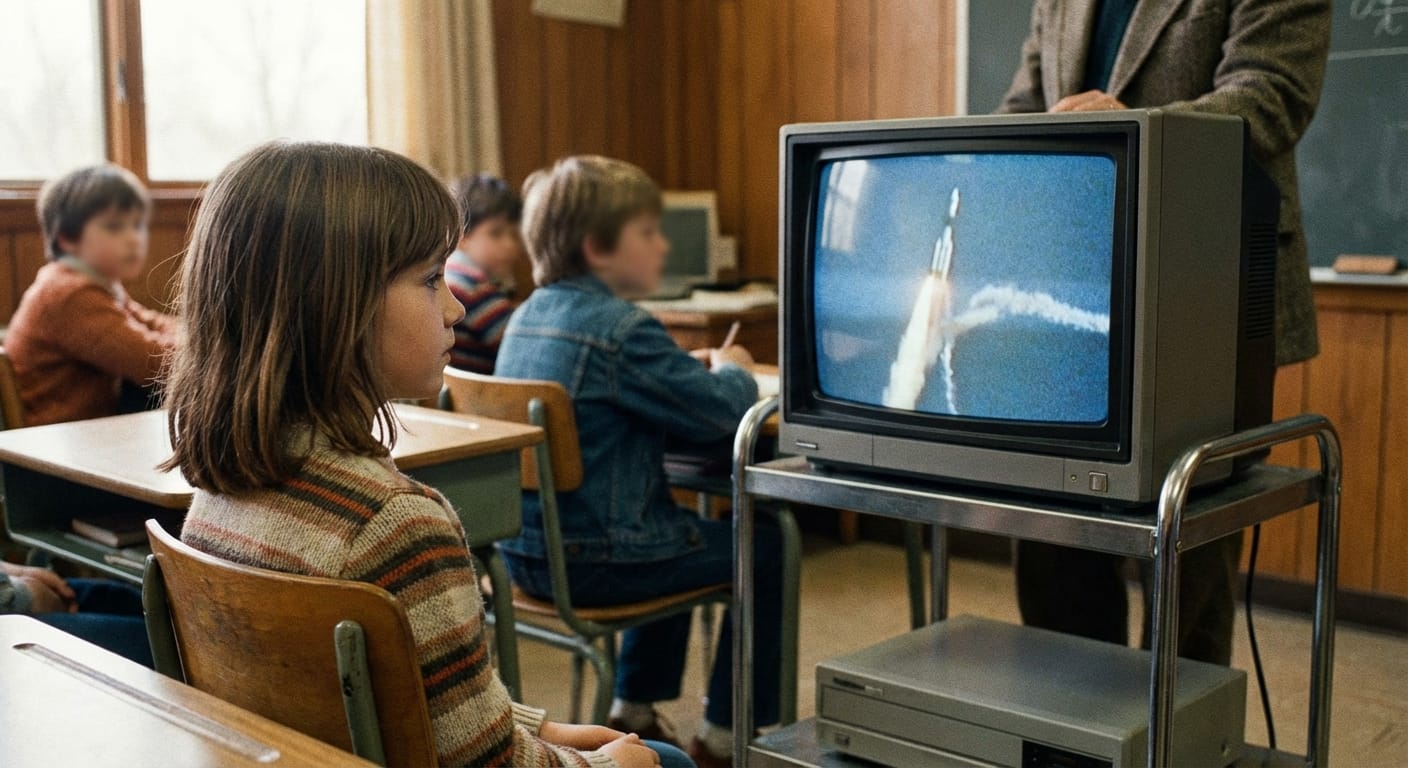
What stays with Karen Mitchell isn’t only the image in the sky—it’s the feeling in the room at the exact second the story changed. A classroom is usually full of small noises: chairs scraping, whispers, pencils tapping. But that day, the sound vanished as if someone had reached in and turned down a dial. The kind of silence that doesn’t feel like good behavior, but like instinct—children sensing an adult truth before anyone explains it.
There was a special electricity beforehand, the kind schools rarely manage. A teacher was going to space. Not a pilot, not a soldier, not some distant figure with a famous name—an everyday adult from a classroom, like yours, going up there. For Karen Mitchell, that detail made the launch feel personal. It wasn’t just a shuttle; it was a bridge between the familiar world of desks and bells and the impossible blue distance on the screen.
That’s why the moment of breakup hit so hard. If the person in the story could have been someone like your own teacher, then the danger didn’t belong only to astronauts in glossy photos. It belonged to ordinary life. And even if you didn’t have the vocabulary for grief or shock, your body recognized the shape of it: excitement replaced by stillness, a room full of kids suddenly careful with their breath.
History later gave the event numbers and official language—73 seconds after liftoff, seven lives lost, a nation watching in real time. But Karen Mitchell’s memory lives in something smaller and sharper: a classroom television doing what it was supposed to do, delivering a shared moment, and then forcing everyone in that room to sit inside a reality no lesson plan could soften.
In the days that followed, adults would have talked. There would have been explanations, news replays, maybe lowered voices in hallways. Yet the most honest version may have been that first understanding Karen Mitchell names so plainly: even as kids, you knew. Not because you understood engineering or policy, but because you understood tone—how excitement sounds, and how it disappears.
And maybe that’s why the image of that television still matters. It isn’t just a relic of 1986 technology. It’s the object that held your class together in the same frame, watching the same sky, learning the same hard thing at the same time. For Karen Mitchell, that screen became a line in your personal timeline: before the room went quiet, and after.
Your Memory on Merch
Love this memory? We can put it on a mug, t-shirt, tote bag, poster, and more! Click below to request your custom merchandise.


About the Storyteller
Karen Mitchell
Memory from January 28, 1986