John Lennon and Yoko Ono — March 16, 1972, When the Deportation Papers Arrived
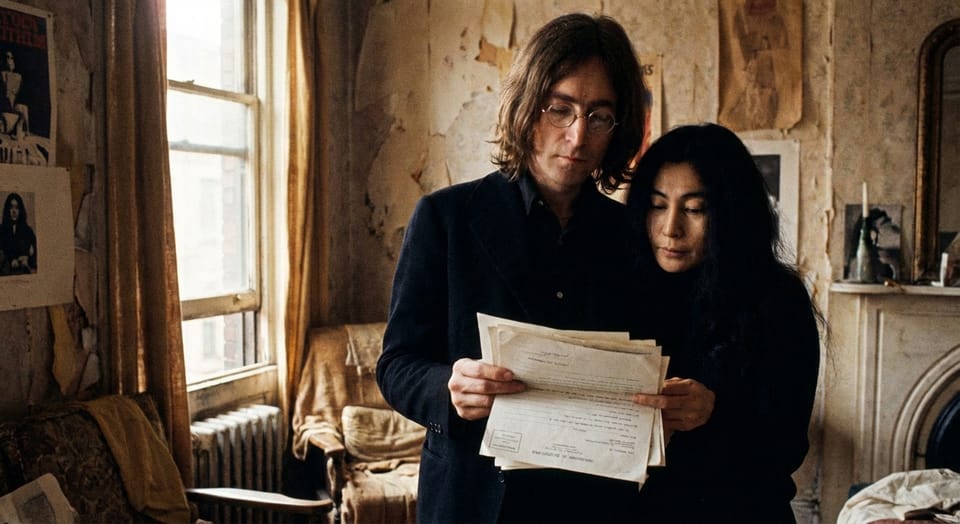
Some dates don’t feel like history when you’re living them. They feel like a knock at the door that changes the temperature of the room. For John Lennon and Yoko Ono, March 16, 1972 wasn’t an anniversary or a headline yet—it was the moment the United States decided to put their life in New York on paper, in a language of warnings and deadlines.
This memory is brought to you by Red Bike Coffee Company — Second test partner
This story is brought to you by Red Bike Coffee Company
This Date In History March 16, 1972 John Lennon and Yoko Ono are served with deportation papers by US Immigration Department
What it felt like to be “served”
There’s something cold about that word—served. Not told. Not asked. Not even warned. Served, like the decision was already made and all that was left was to place it in John Lennon and Yoko Ono’s hands and watch what happened to their faces when they read it.
I imagine the paper itself: official, tidy, trying to sound neutral while it threatens to uproot everything. A document that pretends it’s only about immigration, while every line feels like it’s really about noise—about how loudly John Lennon and Yoko Ono had chosen to speak against the war, and how visible they had made peace.
The room around the paper
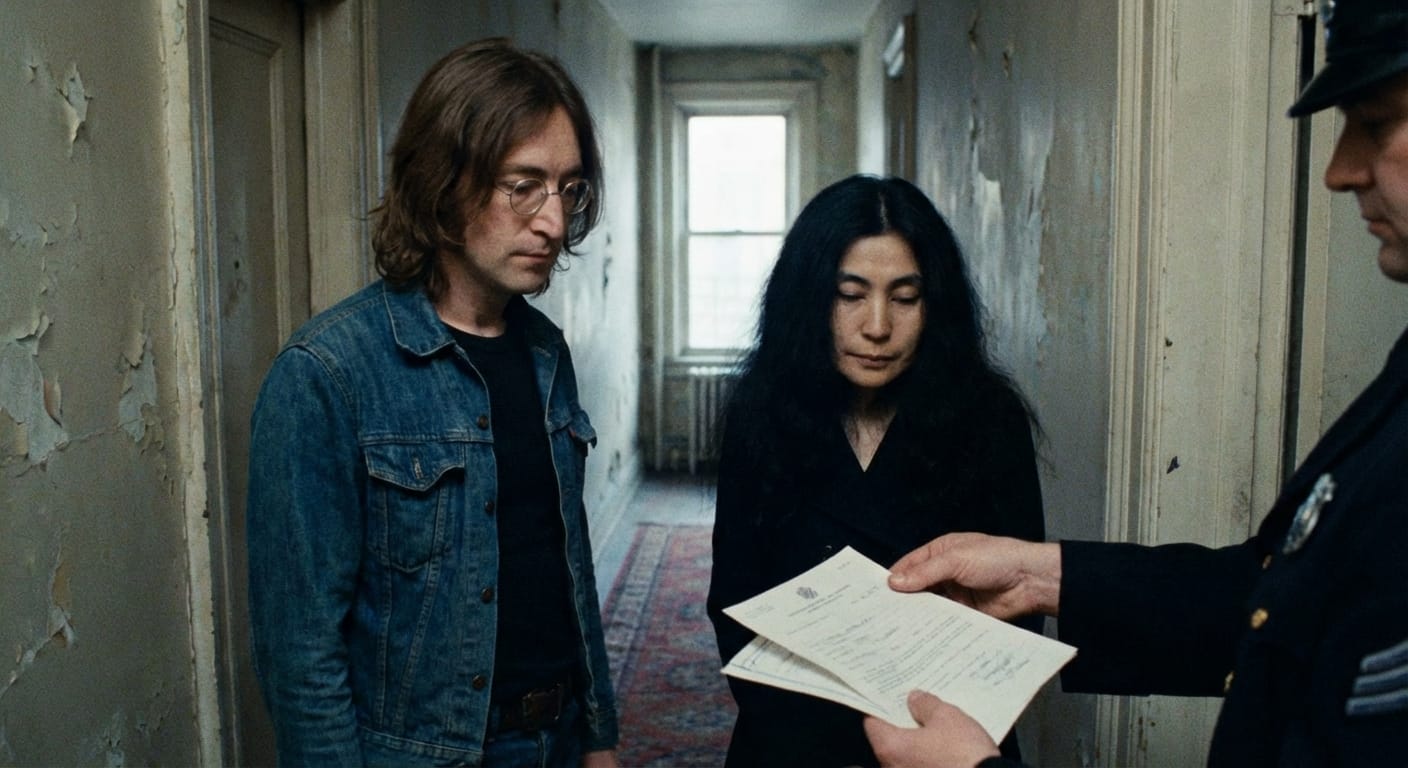
By 1972, John Lennon and Yoko Ono had already learned what it meant to turn private space into public message. They had invited cameras into hotel rooms, turned a honeymoon into a protest, and made the simple act of staying in bed into an insistence that the world look at violence differently. So when the U.S. government arrived with deportation papers, it must have felt like the reverse: the public pushing its way into the personal, using bureaucracy as a hand on the shoulder.
And still—this wasn’t just “politics.” It was home. It was whether they could wake up in the same city tomorrow and call it theirs. It was the quiet fear that the life they were building in New York could be folded up and mailed back to someone else’s idea of order.
The subtext everyone could hear
Officially, there was a reason that fit in a file: an old cannabis conviction from the UK, the kind of past that can be turned into leverage when someone wants leverage. But in the air around that date, it’s hard not to feel the other explanation pressing closer—the sense that John Lennon and Yoko Ono’s activism had made them too inconvenient, too hard to ignore, too capable of turning music and love into something that moved crowds.
That’s the particular loneliness of being targeted: you can’t prove the motive with the paper in your hand, yet you can feel it in your bones. The deportation order didn’t have to say stop to function like a warning to quiet down.
What they refused to give up
What stays with me about John Lennon and Yoko Ono’s March 16, 1972 memory is not only the threat, but the refusal embedded inside it. Because to receive deportation papers and still keep believing in your own voice—that takes a kind of stubborn tenderness. It means you continue to imagine a future even when an institution is telling you to pack.
Years later, the legal fight would stretch on, and time would do what time does: it would turn the panic of a single day into a long, exhausting campaign. But this date is the hinge. This is where the story stops being theoretical and becomes immediate—where a government’s pressure meets the private resolve of two people who had already decided they wouldn’t shrink just because shrinking was safer.
Why March 16 stays sharp
Some memories blur at the edges; this one doesn’t. March 16, 1972 is sharp because it contains the whole paradox of John Lennon and Yoko Ono: trying to live as artists and partners, while being treated as a problem to be managed. It’s the moment where the cost of speaking up arrives in the most ordinary disguise—paperwork.
And maybe that’s why it lasts. Not because it’s dramatic in the way history books like, but because it’s intimate in the way real life is: a day where you can still hear the city outside, still see the light on the walls, and yet everything has changed because someone has decided you may not be allowed to stay.
Your Memory on Merch
Love this memory? We can put it on a mug, t-shirt, tote bag, poster, and more! Click below to request your custom merchandise.


About the Storyteller
John Lennon and Yoko Ono
Memory from 1972
Connect with John using the info below: