
James Whittaker and the Higgins Boat Under Gray Channel Skies
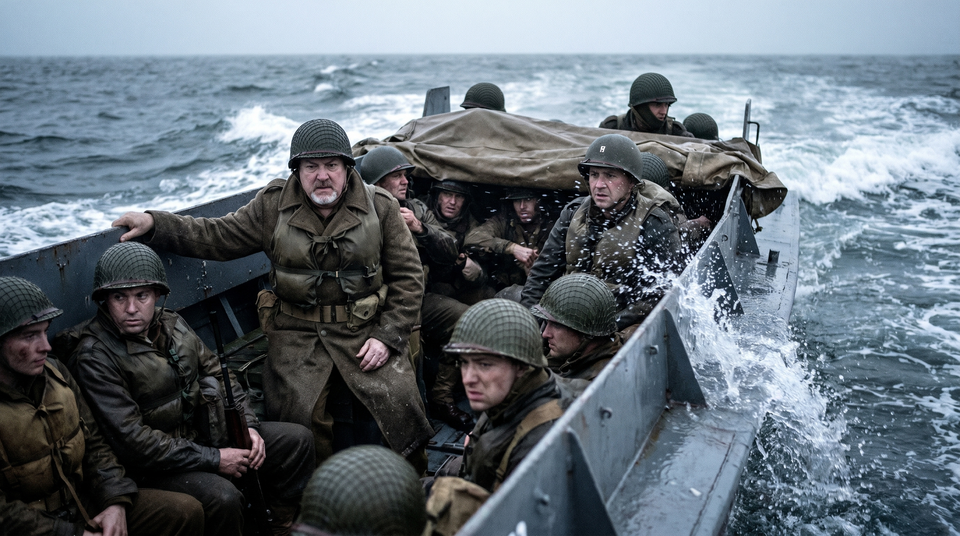
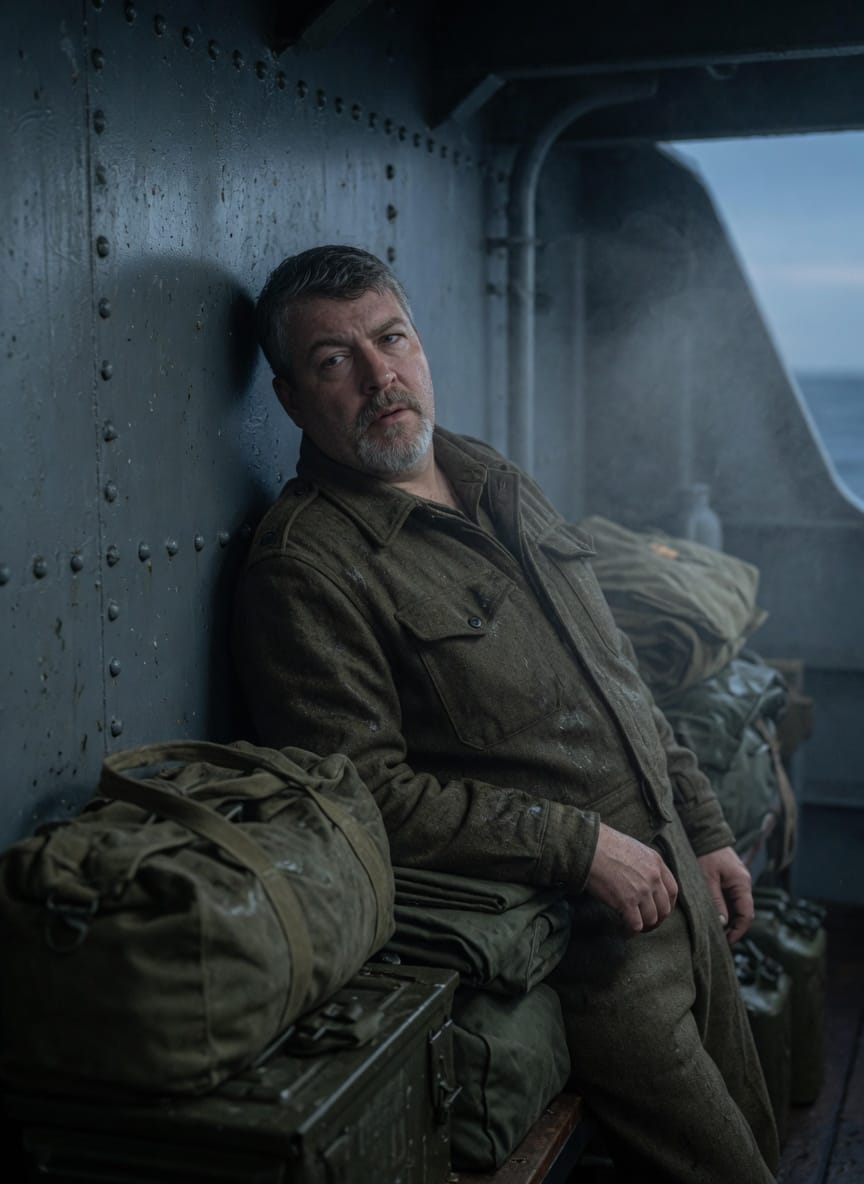
James Whittaker still remembers how waiting can have a weight of its own—how it can press down on a roomful of men until even breathing feels loud. On that transport ship in the English Channel, it wasn’t just nerves. It was the way the air held onto everything: saltwater, fuel, damp canvas, and the knowledge that morning was coming whether anyone was ready or not.
This memory is brought to you by Red Bike Coffee Company — Second test partner
This story is brought to you by Red Bike Coffee Company
"We had been waiting for days, though none of us knew exactly when it would happen. The tension sat heavy in the air aboard the transport ship, mixed with the smell of saltwater, fuel, and damp canvas. Before dawn, word came down. It was time. We climbed into the landing craft in silence, each man carrying more than just his pack. The water was rough, and the boat rocked hard as we pushed toward the shore. Nobody spoke much. Some stared ahead. Others kept their heads down, lost in their own thoughts. As the coastline came into view, everything changed. The distant thunder wasn’t weather—it was artillery. The closer we got, the louder it became, until it filled everything. When the ramp dropped, it felt like the world opened all at once. Noise, movement, confusion—everything happening at once. We moved forward because that’s what we were trained to do. Step by step, through water and sand, trying to stay focused on the man ahead of you. Time didn’t feel real in those moments. Minutes stretched into something longer, heavier. You didn’t think about the whole battle—you thought about the next few steps, the next bit of cover, the next breath. By the time we pushed beyond the beach, the scene behind us felt almost unreal. But there was no time to stop. Orders came, and we moved inland. Only later, much later, did it sink in what that day meant. At the time, it was just survival and duty. But looking back, I realize we were part of something far larger than ourselves—something that would shape the world long after the noise of that morning had faded."
June 6, 1944: The Moment the Waiting Ended
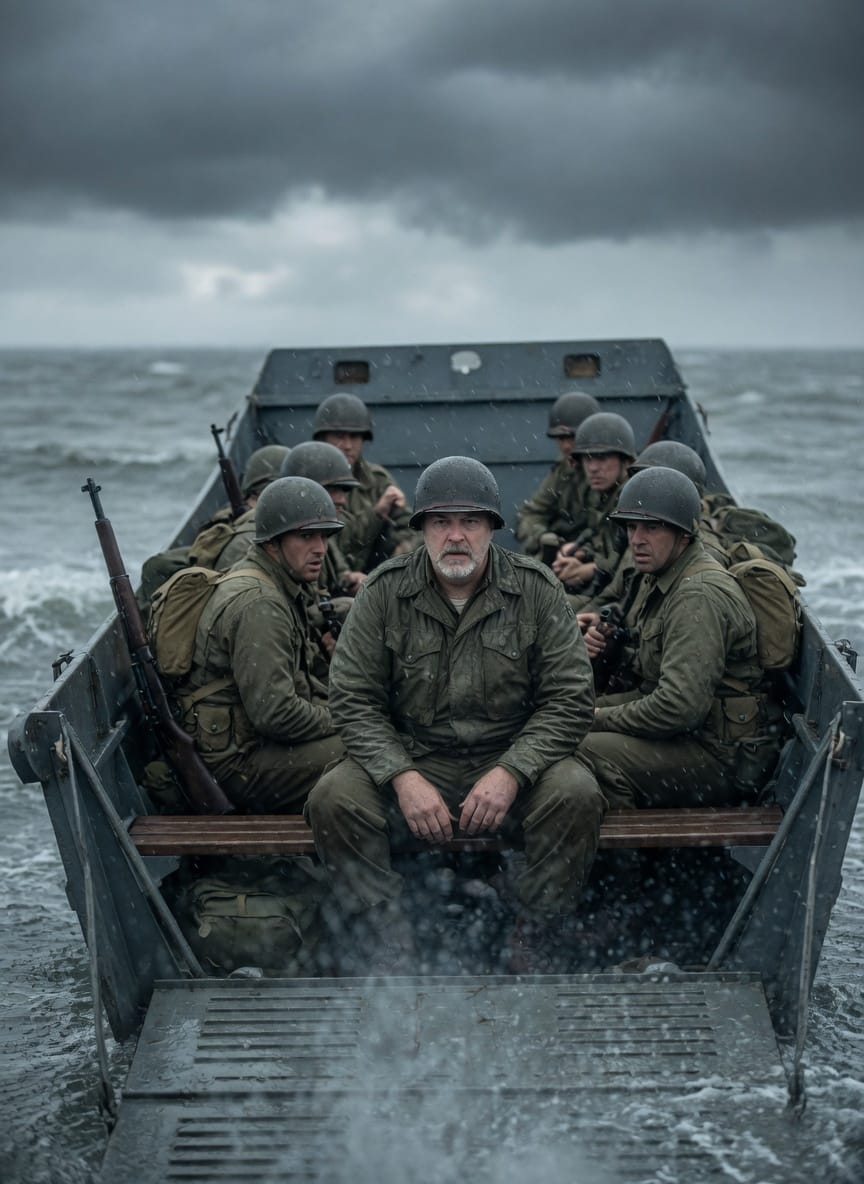
James Whittaker doesn’t describe bravado. He describes the quiet. That near-reverent silence of men climbing down into a Higgins landing craft in the dark, gear biting into shoulders, hands finding whatever holds they can as the Channel throws the boat around. It’s an image that’s hard to shake: not a speech, not a flag—just men arranged shoulder-to-shoulder with nowhere else to put their fear but straight ahead.
He remembers the gray skies over the English Channel as more than scenery. Under that colorless ceiling, everything felt narrowed and immediate: the chop of the water, the slap of spray, the taste of fuel on the back of the tongue. The Higgins boat wasn’t a symbol to James Whittaker in that moment; it was simply the thing that carried him forward, rocking hard, holding together, doing its job while each man tried to do his.
The Sound That Replaced Weather
Then the coastline took shape and the thunder answered a question nobody wanted to ask. James Whittaker marks that shift—the instant the mind stops pretending it’s just another rough crossing. Artillery didn’t arrive as a single shock; it grew louder until it crowded out everything else. And once it filled everything, there was no room left for daydreams, no room left for the life you had before the ramp dropped.
When James Whittaker says the world “opened all at once,” you can feel what he means: the ramp slamming down, the sudden exposure, the violent rush of noise and motion that turns training into instinct. The Higgins landing craft—so practical, so blunt—became a doorway. On the far side was water and sand and the simple, ruthless need to keep pace with the man in front of you.
Measured in Steps, Cover, and Breath
There’s a particular honesty in how James Whittaker talks about time. Not hero-time. Not story-time. The kind where minutes stretch and thicken until they don’t behave like minutes anymore. In that distortion, the battle isn’t something you “understand.” It’s something you move through—one step, one breath, one piece of cover—because stopping to take in the whole would be a luxury your body can’t afford.
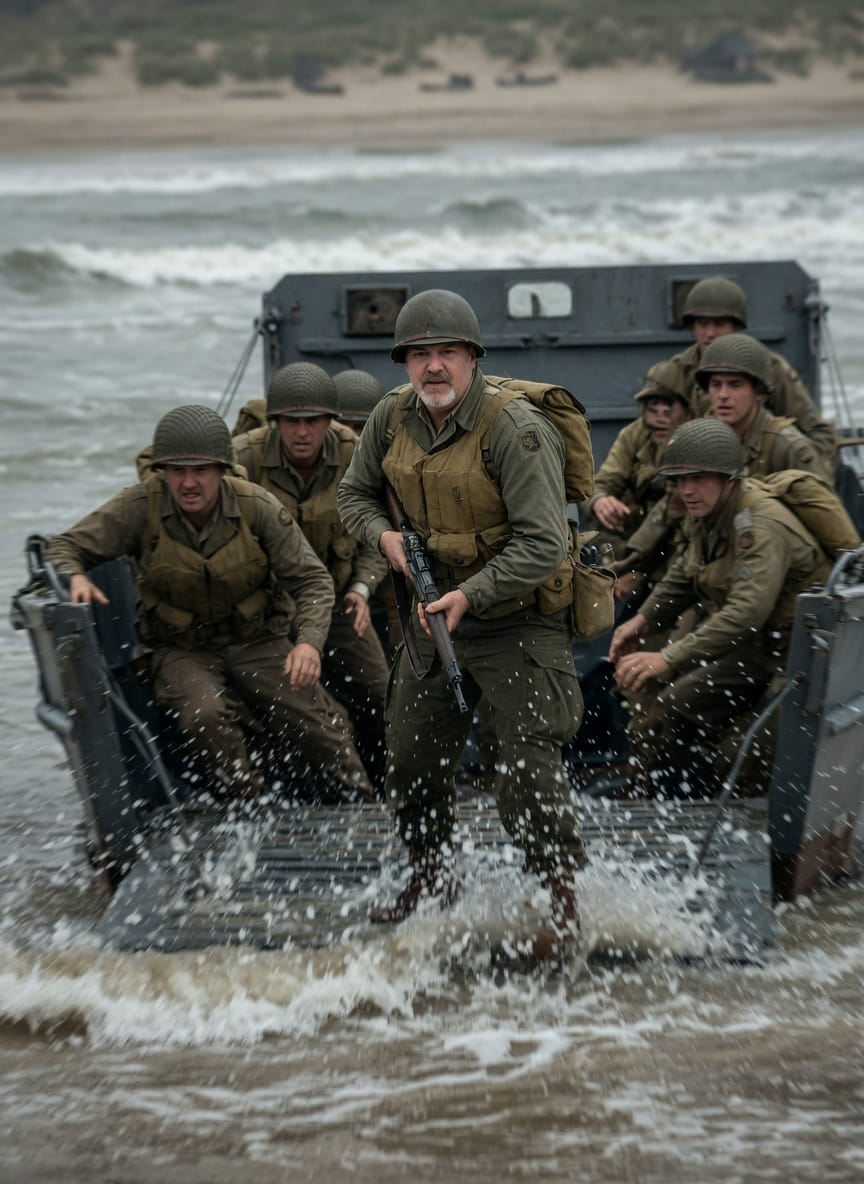
Even pushing beyond the beach didn’t bring relief. For James Whittaker, what was behind him turned unreal not because it was finished, but because there was no space in him to hold it. Orders came. Movement continued. Inland meant forward, and forward meant not looking back—not yet, not while survival was still the only clean thought left.
What Came Later
“Only later” is where the meaning finally had room to land. James Whittaker carried June 6, 1944 for a long time before it became history in his own mind. At first it was simply duty done and breath still in his lungs. The larger story—the one the world would tell about that date—arrived slowly, after the noise faded enough for memory to speak in a normal voice again.
And when it did, it wasn’t abstract. It was personal. James Whittaker could look back and see the scale of it without losing the small details that made it real: the stink of canvas, the rough water, the weight of heavy gear, the gray Channel light, and the strange discipline of focusing only on what was in front of him. History, for him, will always have the shape of a ramp dropping and a man ahead in the surf.
Photos from the Memory

About the Storyteller
James Whittaker
Memory from June 6, 1944