
Harvey And Ken and the April 20, 1972 Headline That Still Sounds Like Tomorrow
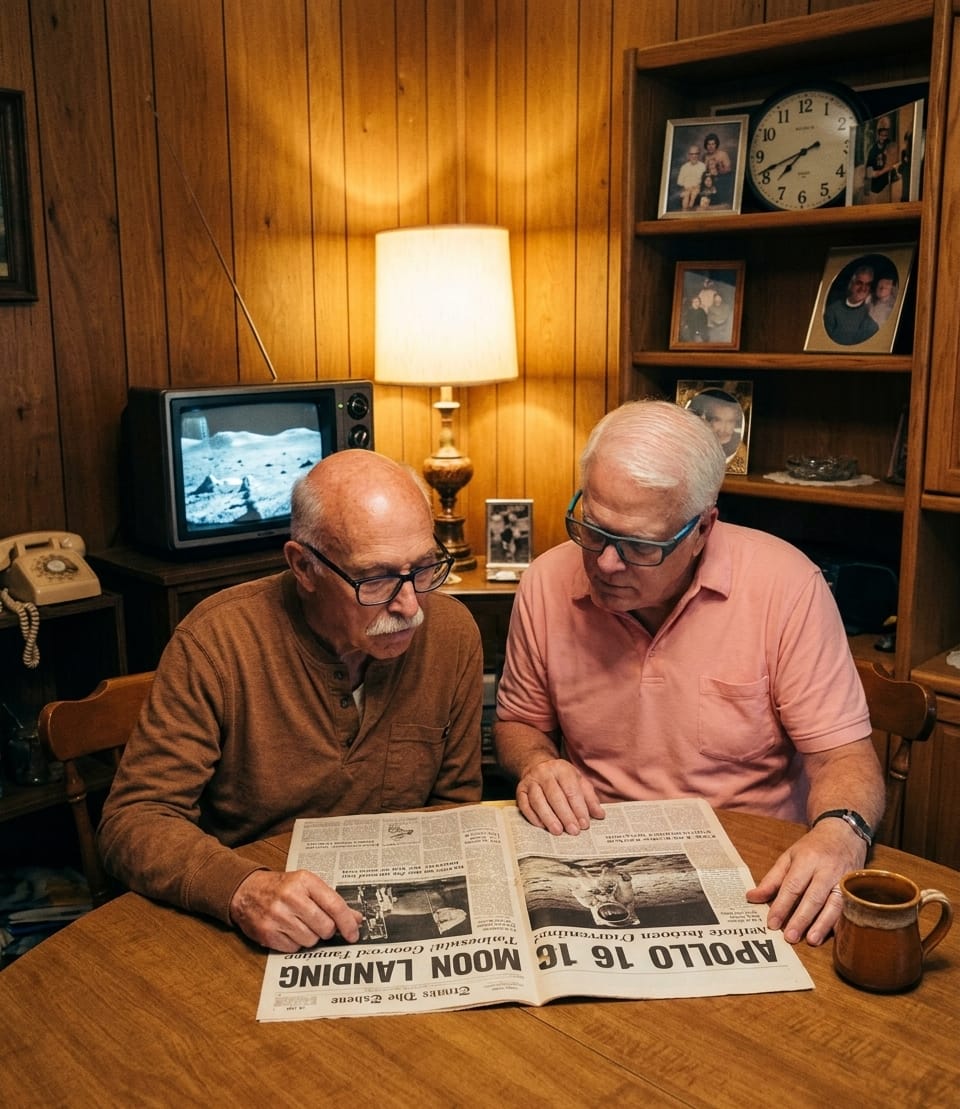
Harvey And Ken, some dates don’t stay politely in the past—they keep showing up like a folded newspaper you can’t quite throw away. April 20, 1972 is one of yours: a day stamped in ink and wonder, when a headline could make your living room feel temporarily as large as the sky.
This memory is brought to you by Oh Sherri Irish Pub — Testing the partner system

This story is brought to you by
Oh Sherri Irish Pub
Testing the partner system
Visit Oh Sherri Irish Pub →"On this date in History, April 20, 1972, NASA Apollo 16's John Young and Charles Duke land on the Moon with Boeing Lunar Rover 2 Harvey Harvey And Ken Go Back To April 20, 1972 and Find Newspaper Headlines Saying: “NASA Apollo 16's John Young and Charles Duke land on the Moon with Boeing Lunar Rover 2." NASA's Apollo 16 mission landed on the Moon at the Descartes Highlands on April 21, 1972, at 02:23:35 UTC. Astronauts John Young (Commander) and Charles Duke (Lunar Module Pilot) touched down in the Lunar Module (LM) Orion, while Ken Mattingly remained in orbit aboard the Command Module Casper. The crew utilized the Lunar Roving Vehicle (LRV-2), which was the second of three rovers built by Boeing National Air and Space Museum to be driven on the lunar surface. Mission Highlights Scientific Focus: This was the first mission to explore the lunar highlands, a region significantly higher than previous landing sites. Surface Excursions: Young and Duke spent approximately 71 hours on the surface, conducting three moonwalks (EVAs) totaling over 20 hours. Rover Stats: They drove the LRV a total of 26.7 kilometers (16.6 miles) across rugged terrain, including trips to sites like Stone Mountain and North Ray Crater. Lunar Samples: The pair collected 95.8 kilograms (211 lbs) of lunar material, including "Big Muley," the largest rock brought back during the Apollo program Records: At age 36, Charles Duke became the youngest person to ever walk on the Moon, a record he still holds. The mission was nearly aborted due to a technical issue with the Command Module's engine gimbal, which delayed the landing by approximately six hours. Despite this, the landing was highly successful and provided critical data that disproved earlier theories about the volcanic origin of the Descartes Highlands. #NASA #Apollo16 #MoonLanding #DescartesHighlands #JohnYoung #CharlesDuke #LunarModule #KenMattingly #CommandModuleCasper #LunarRovingVehicle #Boeing"
Where Harvey And Ken Go When You “Go Back”
The way you wrote it—Harvey Harvey And Ken go back—sounds less like research and more like a ritual. Like you’re not just checking a date, you’re stepping into it. Newspaper headlines are perfect for that. They don’t argue, they don’t soften the edges. They sit there with their bold certainty and say: this is what we thought mattered enough to shout.
And on your April 20, 1972, what mattered was the Moon—again. Not the first time, not the last, but still a time when two men in a craft called Orion put down in a place with a name that feels like a geography lesson from another world: the Descartes Highlands. Reading that now, Harvey And Ken, it’s easy to forget how brave it was to believe this could be routine. Your memory doesn’t treat it as routine at all. It treats it like a fresh miracle that still deserves the ink.
The Detail That Makes It Yours
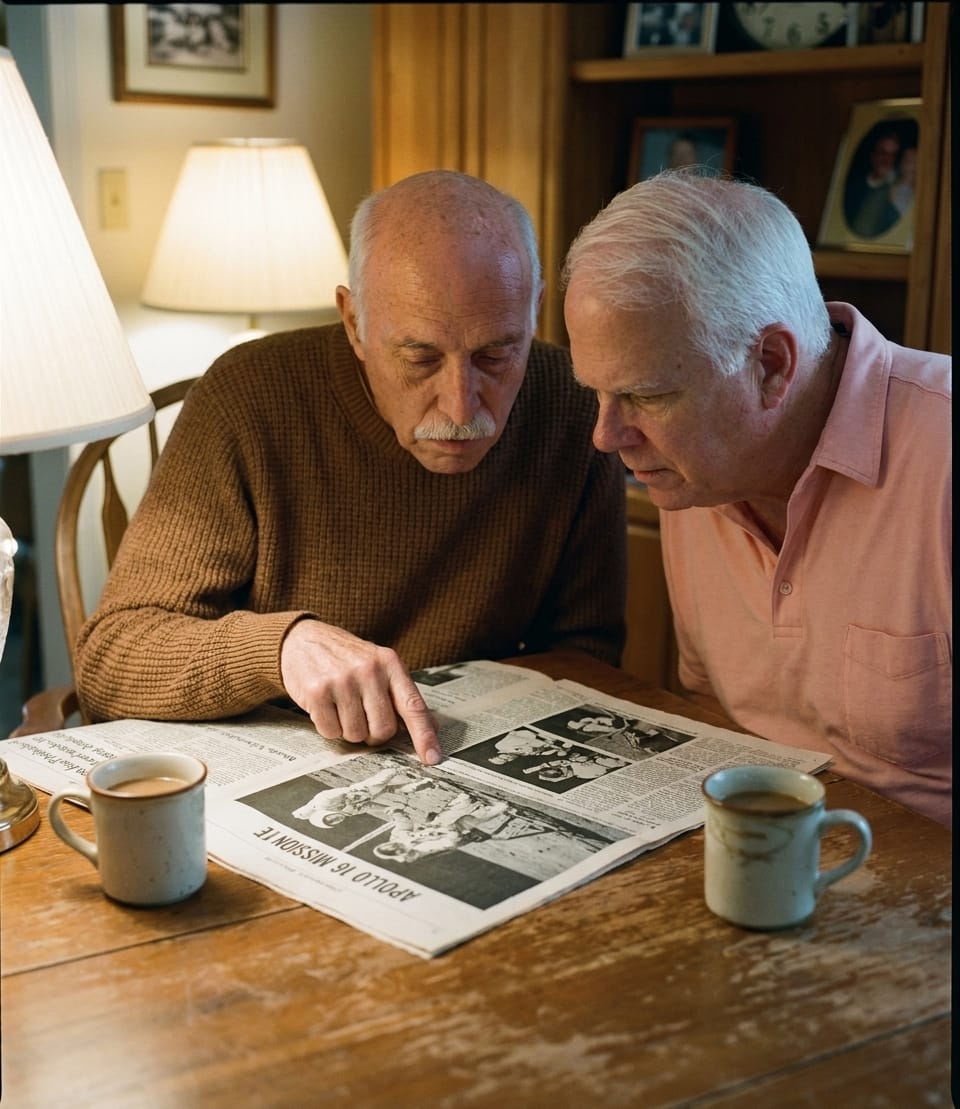
Plenty of people remember “Apollo 16 landed.” But Harvey And Ken, you hold onto the particular shape of the story—the way the mission had characters. John Young and Charles Duke down on the surface. Ken Mattingly alone in orbit in Casper, doing his job while the world’s attention stayed pointed at the dust and the bootprints. That separation—surface and orbit—feels like the kind of human detail that sticks when you’re the sort of person who actually reads past the headline.
And then there’s the rover. Not just a rover—the second one, LRV-2, a machine with the plainspoken confidence of American manufacturing and the absurd, beautiful assignment of driving across the Moon. That’s the hinge of your headline: not only did they land, they drove. You can hear why that would have sounded like tomorrow arriving early, right there on the page.
The Night the Landing Took Its Time
Your memory includes the near-abort—the engine gimbal issue that pushed the landing back by hours. That’s the part that adds a quiet tension to the whole thing. It reminds me that what you’re returning to isn’t a glossy poster version of spaceflight; it’s the real one, where “nearly” lives close to “history.”
Maybe that’s why this date still hooks you. Because a delay isn’t just a delay when the Moon is the destination. It’s time where everyone is forced to wait together—engineers, astronauts, families, strangers with radios, people with newspapers the next morning. The kind of waiting that makes a headline land harder when it finally arrives.
What the Headline Still Gives You
When you revisit April 20, 1972, you’re not only revisiting NASA’s confidence. You’re revisiting your own capacity to be amazed by a single sentence in print—your own willingness to let a story bigger than you move in and rearrange the furniture of a day.
And I think that’s the tender thing at the center of your memory, Harvey And Ken: the proof that wonder doesn’t have to be loud. Sometimes it’s just two names—Young and Duke—set beside a vehicle called Lunar Rover 2, and your mind does the rest. It fills in the silence. It imagines the grit of the highlands. It feels the strange comfort of knowing someone—Mattingly—kept circling above like a steady heartbeat.
Some headlines age into trivia. Yours aged into a place you can still go back to.
Photos from the Memory


About the Storyteller
Harvey And Ken
Memory from 1972
Connect with Harvey using the info below:
https://www.facebook.com/silver.fox.9862/