Harvey and the 1957 Pontiac Star Chief Safari: The Tri-Power Dream That Never Quit
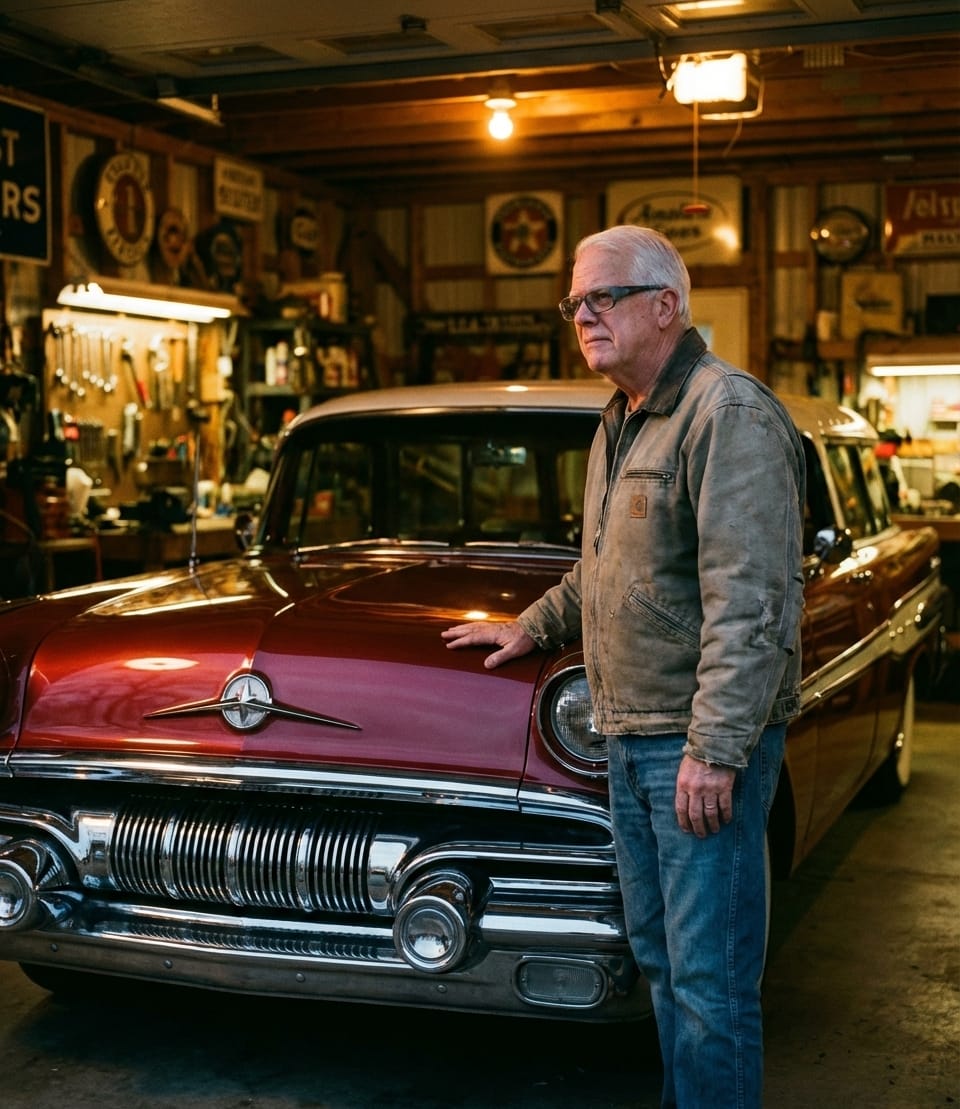
Some dream cars live in posters and parking lots. Harvey’s lives somewhere closer—behind the eyes, right where the good wanting stays. When he says “1957 Pontiac Star Chief Safari,” it doesn’t land like trivia. It lands like a name you still say the same way you always have, because the feeling attached to it never got old.
https://youtu.be/nzyJMg2Iay4?si=6AAjb6l9HtCykmIK
This memory is brought to you by Red Bike Coffee Company — Second test partner
This story is brought to you by Red Bike Coffee Company
"Harvey's Dream Car 1957 Pontiac Star Chief Safari - The Tri-Power Nomad Restored! The 1957 Pontiac Star Chief Safari is a high-end, two-door "sport wagon" that served as Pontiac's premium alternative to the Chevrolet Nomad. Produced as part of the flagship Star Chief line, it is significantly rarer than its Chevy cousin, with only 1,291 to 1,294 units built in 1957 compared to over 6,000 Nomads. Key Specifications & Performance Engine: The standard powerplant was a 347 cubic-inch V8. Tri-Power Setup: The highly sought-after "Tri-Power" option featured three two-barrel carburetors, boosting output to approximately 315–317 horsepower. Transmission: Most were equipped with the Strato-Flight Hydra-Matic 4-speed automatic transmission, though manual options existed. Performance: Capable of 0–60 mph in roughly 9 seconds with a top speed exceeding 100 mph. Design & Luxury Features While sharing the basic GM "A-body" platform and two-door wagon silhouette with the Nomad, the Safari offered more exclusive styling and upscale amenities: Exterior Styling: Features distinctive "Star Flight" elements, including jet-inspired tailfins, a wide split grille, and prominent chrome "stars" on the rear fenders. "Banana Peels": Collectors often refer to the unique chrome strips on the tailgate as "banana peels". Interior: Positioned as a luxury vehicle, it featured two-tone upholstery (often leather or premium vinyl), a padded dashboard, and fully carpeted load areas. Premium Options: Available with rare-for-the-time features like factory air conditioning, power steering, power brakes, and the "WonderBar" signal-seeking AM radio. Market Value & Rarity Today, the 1957 Safari is a prized collector's item due to its low production numbers and association with the "Tri-Five" era. Auction Prices: Well-restored or rare "Tri-Power" examples have sold at auction for between $66,000 and $92,000 in recent years. Variants: In mid-1957, Pontiac also introduced the Safari Transcontinental"
The way Harvey talks about it, you can tell it was never “just a wagon.”
Harvey’s dream isn’t parked in the usual lane. Not a convertible everybody recognizes from twenty paces. Not the obvious choice. His is a long-roof, two-door kind of wanting—the 1957 Pontiac Star Chief Safari—where practicality and swagger shook hands and somehow made something elegant.
And it matters to Harvey that this Safari sat at the top of Pontiac’s world. The flagship Star Chief line. The premium alternative to the Chevrolet Nomad. He remembers (and insists, correctly) that it was rarer by far—only 1,291 to 1,294 built in 1957. That number isn’t a flex; it’s part of the ache. It means you could spend a lifetime looking and still never stumble into one by accident.
Tri-Power: three carburetors, one heartbeat
If you want to understand why Harvey calls it “the Tri-Power Nomad,” start with what he chose to hold close: that 347 cubic-inch V8, and the option that turned it from impressive to almost mythical—Tri-Power. Three two-barrel carburetors. The kind of engineering that feels like a dare. For Harvey, it’s not about bench-racing numbers as much as what the numbers promise: the instant you press down, the car answers back like it’s been waiting for you specifically.
Even the transmission detail—most wearing the Strato-Flight Hydra-Matic 4-speed automatic—fits the picture Harvey keeps. A car built to move, not pose. The kind of machine you imagine sliding into Drive with a steady hand, then feeling the whole body of the car settle, ready to go.
The details Harvey can’t forget: stars, fins, and “banana peels”
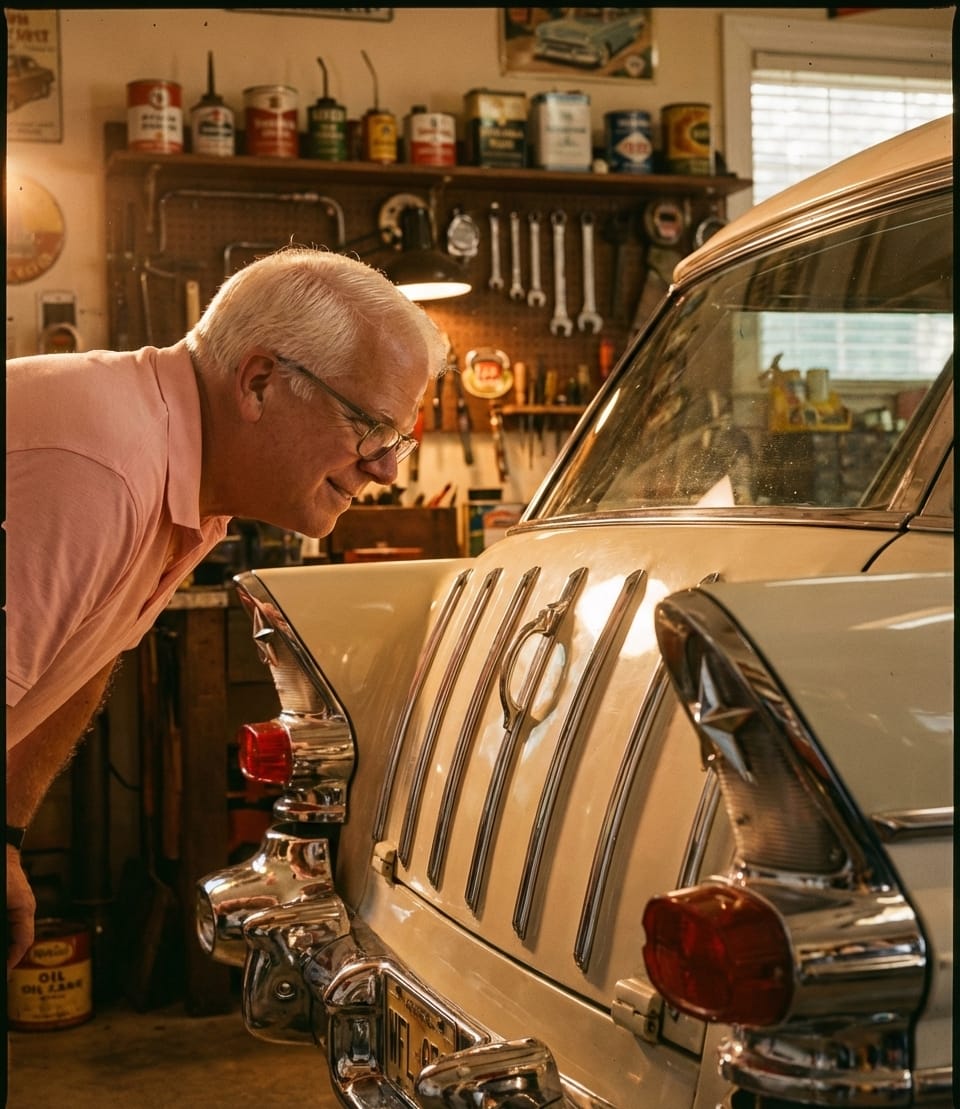
Harvey’s affection lives in the styling as much as the sound. He notices the “Star Flight” cues—the jet-inspired tailfins, the wide split grille, and those chrome stars on the rear fenders that look like they were placed there to catch the last light of day. In Harvey’s mind, the Safari isn’t just rare; it’s dressed for the role.
Then there’s the tailgate—those chrome strips collectors call “banana peels.” It’s such a specific, affectionate nickname that it feels like something you’d only say if you’ve stood behind one long enough to grin at it. Harvey carries that grin in the memory, because it’s the kind of detail that makes the car feel like a character, not an object.
Luxury the way Harvey likes it: quiet, deliberate, real
What Harvey loves about the Safari is that it offered luxury without begging for attention. Two-tone upholstery. A padded dashboard. Carpet even where most cars would’ve left you bare paint and a shrug. It’s the sort of interior that suggests someone, somewhere, believed a “sport wagon” could be both useful and beautiful—and decided to prove it.
And the options Harvey lists—factory air conditioning, power steering, power brakes, the WonderBar signal-seeking AM radio—read like a small catalog of comfort from a time when comfort was still a little bit miraculous. You can almost hear the radio searching, pausing, landing on a song, the cabin filling with it like warm air.
“Restored” doesn’t mean finished—it means brought back to the moment
Harvey’s title includes a word that changes everything: restored. Because restoration isn’t only polish; it’s rescue. It’s the belief that something worth dreaming about is also worth returning to, bolt by bolt, until it can carry the weight of memory again.
Even the market numbers—$66,000 to $92,000 for well-restored Tri-Power examples—don’t feel like the point when you hear them through Harvey. They’re just proof that the world finally agrees with what he knew all along: this car was special. But Harvey didn’t need an auction block to tell him that. He needed one good look, one good listen, and the feeling locked in.
Harvey’s dream car, still doing what dream cars do
Somewhere inside Harvey’s memory, the 1957 Pontiac Star Chief Safari sits perfectly composed: fins sharp, chrome bright, stars catching light, tailgate wearing its “banana peels” like jewelry. In that picture, the Tri-Power isn’t a spec—it’s a promise. A certain kind of American confidence. A certain kind of night drive. A certain kind of life that feels bigger at the edges.
And the most personal part is this: Harvey chose a car that not everybody chooses. He didn’t fall for the loudest legend in the room. He fell for the rarer one—the one you have to mean. That says more about Harvey than any spec sheet ever could.
Photos from the Memory

Your Memory on Merch
Love this memory? We can put it on a mug, t-shirt, tote bag, poster, and more! Click below to request your custom merchandise.


About the Storyteller
Harvey
Memory from 1957
Connect with Harvey using the info below:
https://www.facebook.com/silver.fox.9862/