
Alan Richards and the All-Night Van Ride to a Muddy August 1969 Field
Alan Richards still measures certain nights by that one long drive out of Pennsylvania—the kind where time stops behaving normally and the world narrows to headlights, exhaust, and the simple insistence of following the car in front of you.
This memory is brought to you by Oh Sherri Irish Pub — Testing the partner system

This story is brought to you by
Oh Sherri Irish Pub
Testing the partner system
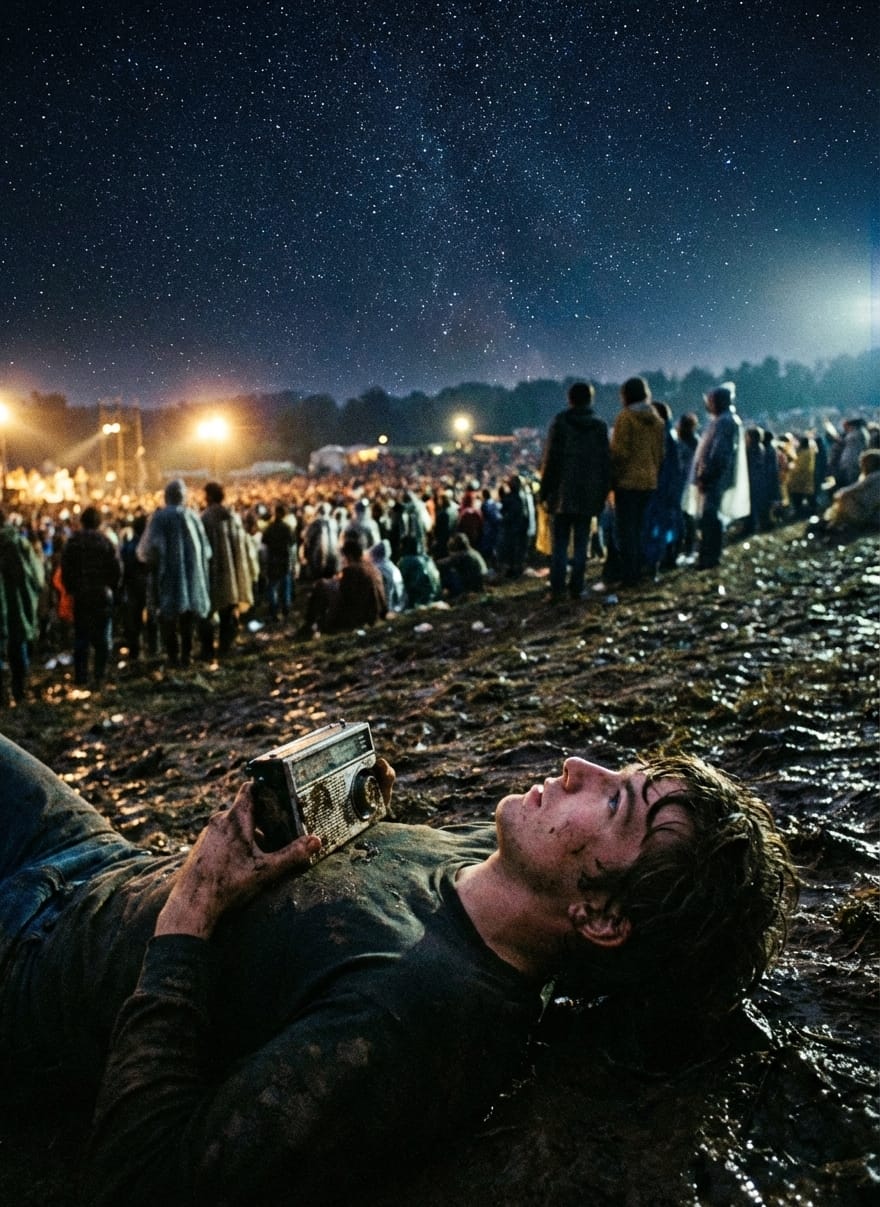
Visit Oh Sherri Irish Pub →We drove all night from Pennsylvania in a beat-up van, following a line of cars that seemed to stretch forever. By the time we got close, the roads were jammed and people were just walking the rest of the way. The field was bigger than anything I had ever seen—thousands of people, music floating through the air, and mud everywhere from the rain. Nobody seemed to mind. Strangers shared food and blankets like old friends. When the music started, the crowd swayed together like one living thing. I remember lying on the grass late at night, staring up at the sky and thinking I’d never again see so many people gathered peacefully in one place.
What Alan Richards Remembers First
It isn’t a song title that arrives first for Alan Richards—it’s the motion of it all: that endless line of cars, the van’s tired bones rattling through the dark, and the feeling that the closer you got, the less the roads belonged to traffic and the more they belonged to people.
That detail—everyone simply getting out and walking—turns the memory into something physical. Alan Richards can still feel the moment the trip stopped being a drive and became a pilgrimage, the ordinary logic of lanes and turn signals replaced by a shared decision: we’ll just go from here on foot.
The Mud Didn’t Ruin It—It Proved It
When Alan Richards says the field was bigger than anything he’d ever seen, it’s not just geography. It’s scale as shock—how a single open space can suddenly hold more humanity than you thought you’d ever stand inside of. And then the rain, and then the mud, as if the place insisted on making everyone equal right away.
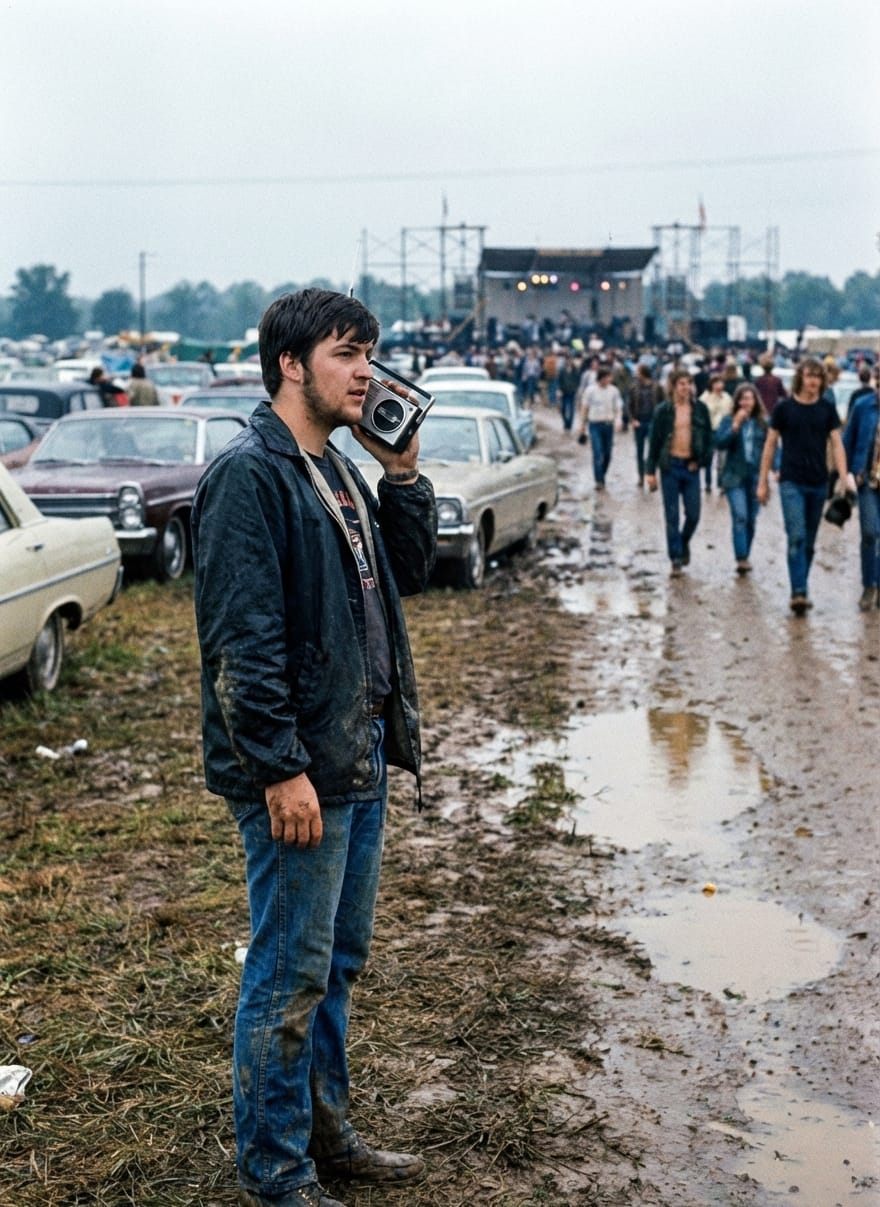
August 1969 had plenty of reasons for people to be suspicious of one another, but Alan Richards remembers the opposite: strangers handing over food and blankets without the stiff little pause people usually put between themselves and kindness. In the mud, social polish didn’t stand a chance; what was left was need, generosity, and a kind of unspoken agreement to take care of whoever was nearest.
The Portable Transistor Radio: A Small Anchor in a Huge Crowd
Alan Richards’s portable transistor radio belongs in this story the way a pocketknife belongs in a camping trip—small, practical, oddly comforting. In a field that big, with sound drifting and weather changing, a radio isn’t just a gadget. It’s a handhold. Something you can carry that still feels like yours when everything around you is shared.
Even if the music was already “floating through the air,” the transistor radio represents control in the gentlest way: a dial you can turn, a speaker close enough to your ear to remind you that you’re a single person inside a historic crowd, not swallowed up by it.
When the Crowd Became One Living Thing
Alan Richards describes the moment the music started not as noise but as movement—thousands of bodies swaying until the field itself seemed to breathe. That’s a rare kind of memory because it’s both intimate and enormous: your own chest humming along, while the whole hillside answers back.
And then there’s the image that lingers the longest—Alan Richards on the grass late at night, looking up. Not scanning for anything in particular. Just staring at the sky the way you do when you can finally stop bracing yourself. He remembers thinking he’d never again see so many people gathered peacefully in one place, and the weight of that thought is what turns the scene from “a festival” into a personal milestone.
Afterward, the World Felt Louder
Some memories don’t fade; they sharpen. For Alan Richards, that night in August 1969 holds a specific kind of quiet inside the noise—the unlikely calm of a massive crowd choosing, for a little while, to be gentle. It’s the kind of peace you don’t argue with later. You just carry it.
Years can stack up between then and now, but the feeling stays strangely reachable: the van ride’s exhaustion, the surrender of walking the final stretch, the mud that didn’t matter, the radio in his hand, and a sky above a field full of people who—against expectation—moved together like they meant no harm.
Photos from the Memory

Your Memory on Merch
Love this memory? We can put it on a mug, t-shirt, tote bag, poster, and more! Click below to request your custom merchandise.


About the Storyteller
Alan Richards
Memory from August 1969