Aaron Mitchell and the Night Music Changed: Hearing a CD in 1993
Aaron Mitchell still remembers the exact kind of surprise that doesn’t announce itself as a “big moment” until years later—just a small click of technology that made everything else feel suddenly older.
This memory is brought to you by Red Bike Coffee Company — Second test partner
This story is brought to you by Red Bike Coffee Company
The sound was so clear compared to tapes. I remember skipping through tracks just because I could. It felt like music had taken a step forward overnight.
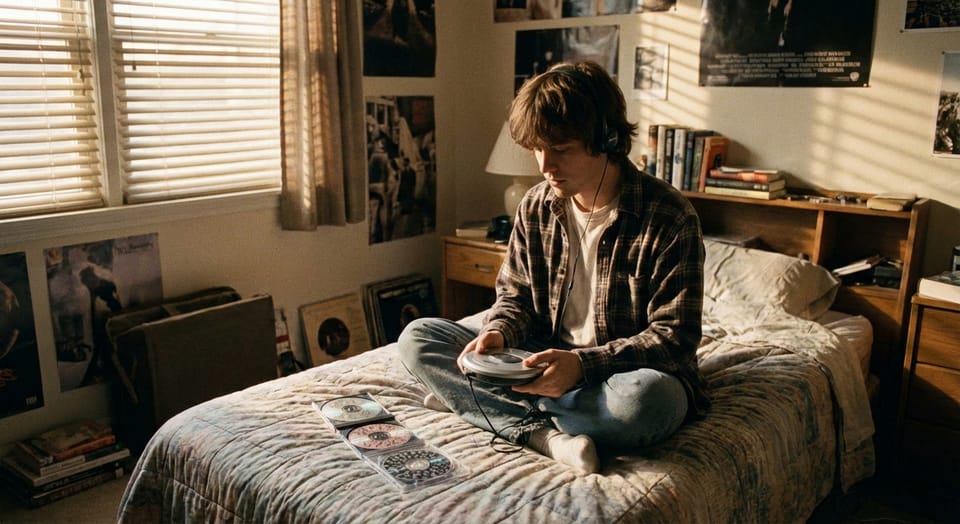
It’s 1993, and Aaron Mitchell is holding a portable CD player like it’s a glimpse of the future that happens to fit in his hands. The wired headphones make it feel official—like this isn’t background noise anymore, it’s a private room he can carry with him. And the music CD case is there too, a quiet promise that this isn’t a one-disc novelty. This is a new way of living with music.
What Aaron Mitchell is describing isn’t just “better audio.” It’s the absence of a whole set of little hassles he’d learned to accept with tapes—the soft blur, the hiss that lived underneath everything, the sense that the song was always slightly behind a veil. When he says the sound was clear, you can almost hear what he means: the edges of the drums, the clean start of a vocal, the space between instruments that suddenly exists.
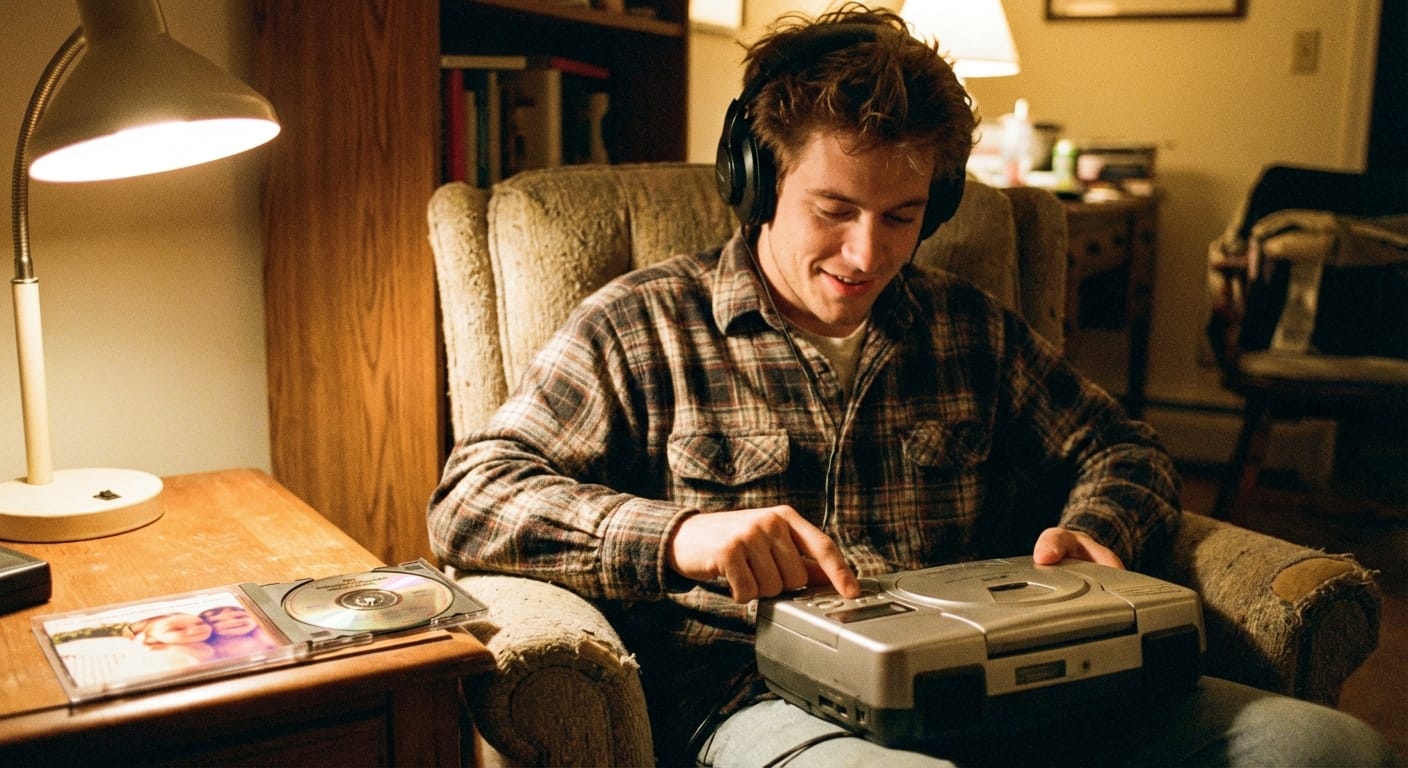
And then there’s the skipping. Not the accidental, maddening kind—his kind. The kind that feels like power. Aaron Mitchell remembers pressing a button and jumping ahead just because he could, like testing a new muscle. With tapes, you had to commit to the fast-forward ritual: the uncertain timing, the overshoot, the rewinding, the patience. A CD let you be curious without penalty. It let you treat an album like a map you could fold open anywhere.
The quiet thrill of control
There’s something tender in the way Aaron Mitchell frames it: not as a brag, not as a tech review, but as a feeling. That urge to skip through tracks “just because I could” isn’t really about being restless—it’s about discovering that music could respond to him. In 1993, that responsiveness would have felt almost unreal, like the player was listening back.
The wired headphones matter here too. They make the moment intimate. The world can carry on—people talking, doors closing, traffic somewhere—while Aaron Mitchell steps into a cleaner, closer version of the song. A portable CD player wasn’t just a gadget; it was a way to draw a line around your attention and say: this is mine for a while.
Overnight, everything shifts
When Aaron Mitchell says it felt like music had taken a step forward overnight, he’s naming the strange speed of certain changes. One day, you’re used to working around limitations. The next day, the limitation is gone and you can’t believe you ever tolerated it. It’s not only that CDs sounded different—it’s that they changed the relationship. Suddenly, the album wasn’t something you handled carefully and patiently. It was something you navigated.
That’s the part that lingers: the moment when “listening” quietly becomes “choosing.” The player in Aaron Mitchell’s hands doesn’t just play songs—it gives him access. It lets him jump straight to the track he’s been waiting for, or replay a favorite instantly, or skim the beginning of an album the way you’d flip pages. In 1993, that kind of freedom could feel like the future arriving without asking permission.
Your Memory on Merch
Love this memory? We can put it on a mug, t-shirt, tote bag, poster, and more! Click below to request your custom merchandise.


About the Storyteller
Aaron Mitchell
Memory from 1993